Every city has a neighborhood that explains it. For Los Angeles, that neighborhood might be Hancock Park. Laid out in the 1920s on land that once belonged to the Hancock family, it was built as a statement: wide streets, deep setbacks, mature trees, and houses designed by serious architects for people who intended to stay. A century later, remarkably little has changed. That is precisely the point, and precisely why buyers compete so hard to get in.
This guide covers what makes Hancock Park distinct, where its boundaries actually fall, how the historic protections work, and what to expect when you decide to buy here.
The Architecture Is the Whole Story
Hancock Park is one of the finest collections of period revival architecture in the country. The houses went up largely between the early 1920s and the Second World War, and they came in the great revival styles of that era: English Tudor, Spanish Colonial Revival, Mediterranean, American Colonial, French Normandy. Some of the most respected architects working in Los Angeles at the time, Paul Revere Williams among them, left their mark on these streets.
What strikes buyers on a first drive through is the coherence. These are substantial homes on substantial lots, but nothing shouts. Scale, materials, and landscaping all agree with one another, block after block. Walk down June Street, Muirfield Road, or Hudson Avenue and you will understand why film crews use the neighborhood as a stand in for the American everywhere: it looks the way people imagine a great residential street should look.
Inside, the houses deliver what newer construction rarely does. Formal entries, real dining rooms, generous ceiling heights, original millwork and hardware, staircases meant to be seen. Many have been thoughtfully updated over the decades; the best renovations open up kitchens and family rooms while leaving the formal rooms intact.
Where Hancock Park Begins and Ends
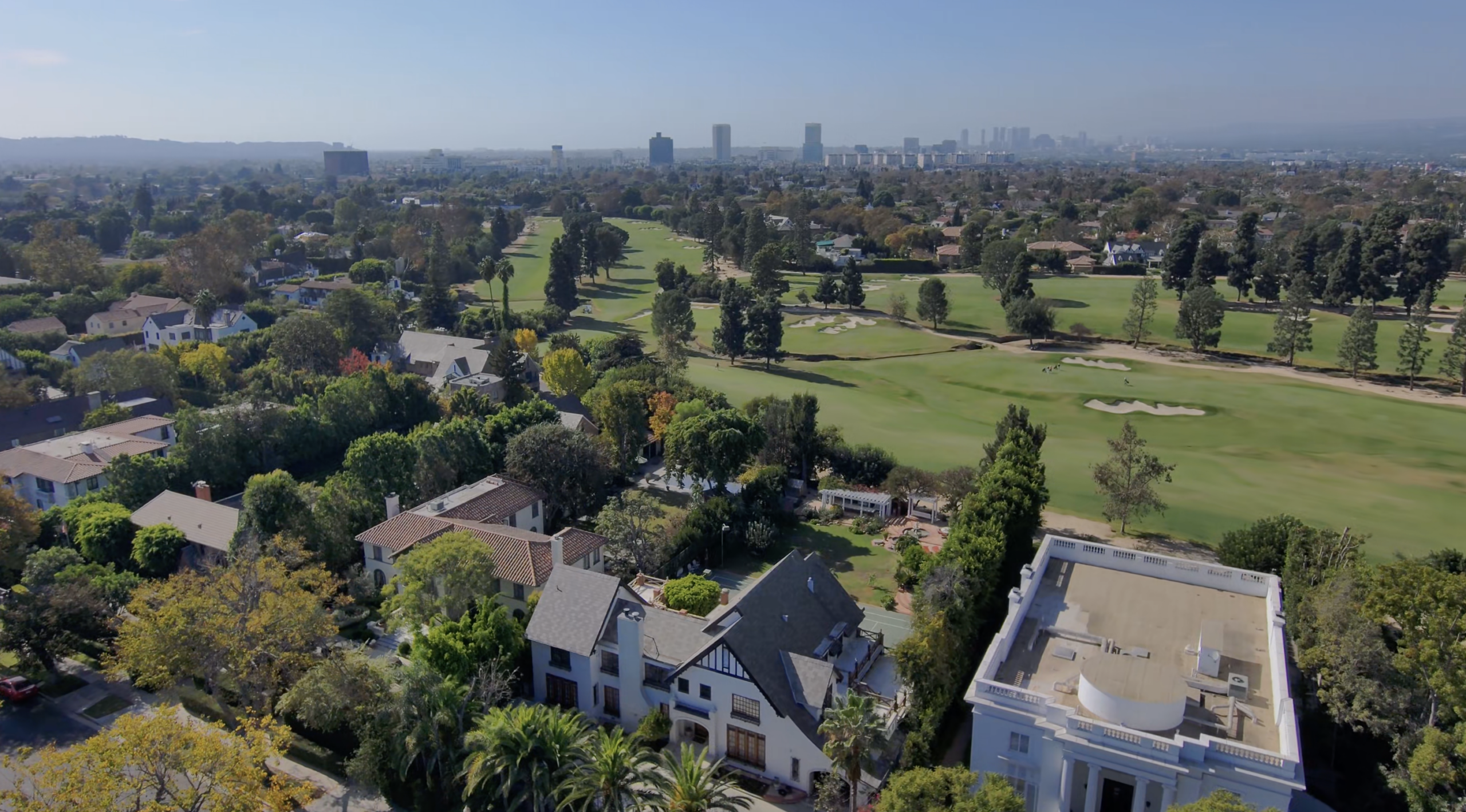
Purists define Hancock Park tightly: Melrose Avenue to the north, Wilshire Boulevard to the south, Highland Avenue to the west, and Rossmore Avenue to the east, with the Wilshire Country Club sitting at the neighborhood’s heart. The club’s golf course is the reason several streets end in quiet cul de sacs and the reason some of the most coveted homes back directly onto fairway green.
Cross Rossmore heading east and you are in Windsor Square, a sister neighborhood with its own history, its own historic protections, and the Getty House, the official residence of the mayor of Los Angeles. South of Wilshire sits Brookside, a smaller pocket threaded by one of the city’s few natural streams, and the gated enclave of Fremont Place. Agents and locals often use “Hancock Park” loosely to cover all of it. When you are evaluating comps, be precise. The tightly defined core and the surrounding pockets behave as related but distinct markets.
The HPOZ, in Brief
Hancock Park is a Historic Preservation Overlay Zone, the city of Los Angeles designation that protects the character of historic neighborhoods. In practical terms, exterior changes visible from the street go through a review process, and demolition of contributing homes is heavily restricted. Interiors are yours to renovate.
Buyers sometimes hear “HPOZ” and worry about red tape. The better way to think about it: the overlay is the reason the neighborhood still looks the way it does, and it protects the value of every house on the block. You will never wake up to find a glass box replacing the Tudor next door. If you are weighing a significant renovation, build the review timeline into your plans and work with an architect who knows the process. Owners of contributing historic homes may also want to ask about the Mills Act, a property tax program that can meaningfully reward preservation.
Daily Life Runs Through Larchmont
The neighborhood’s living room is Larchmont Boulevard, the low slung village street just east of the core. Larchmont Village still functions the way neighborhood main streets did a few generations ago: coffee in the morning, a bookstore, longtime restaurants, and a Sunday farmers market that draws the whole area out on foot.
The location is one of the most central in the city. Paramount Pictures is minutes away, which is why the neighborhood has housed studio executives and entertainers since the silent era. Midtown’s museums and offices along the Miracle Mile sit just west, Koreatown’s restaurants just east, and the studios of Hollywood directly north. For buyers who work on both sides of town, Hancock Park’s position between the Westside and Downtown is a genuine daily advantage. Families are also drawn by the schools, including Third Street Elementary and Marlborough, the girls’ school that has anchored the neighborhood’s eastern edge for more than a century.
What to Expect as a Buyer
Hancock Park is a low inventory market by nature. Families hold these houses for decades, and in any given season only a modest number of homes trade hands. When a well preserved house on a prime street does come up, it draws deep interest, and the strongest properties often sell quickly, sometimes before they are widely marketed. Quiet, off market activity is a real feature of this neighborhood, which makes representation with strong local relationships worth more here than in most markets.
Diligence matters more than usual, too. You are buying a house that may be a hundred years old, so sewer lines, foundations, electrical systems, and any unpermitted additions deserve careful inspection. None of this should scare you off; it simply rewards buyers who come prepared.
Price in Hancock Park tracks street, lot, architectural pedigree, and condition. A fairway adjacent estate on June or Muirfield occupies a different tier than a charming smaller home near the neighborhood’s edges, and both have their audience.
Is It the Right Neighborhood for You?
Buyers who love Hancock Park tend to be choosing character over novelty. If your taste runs to new construction with walls of glass, the hills or the Bird Streets will serve you better. If you want gracious rooms, real gardens, neighbors who know each other, and a streetscape that will look the same in thirty years, very little in Los Angeles compares. Shoppers in this part of the city should also walk Windsor Square and Brookside before deciding; each offers a slightly different answer to the same question.
I help buyers and sellers across the historic core and the rest of the Los Angeles luxury market, and Hancock Park remains one of the neighborhoods I know best. If you are considering a purchase here, or quietly weighing a sale, I am glad to share current intelligence on what is moving and what may become available.
The most beautiful residential streets in Los Angeles did not stay that way by accident. Behind the intact rows of Spanish Colonial Revival and Tudor homes in the city’s best older neighborhoods sits a piece of zoning most buyers have never read: the historic preservation overlay zone, or HPOZ. The city now has 35 of them, and if you are shopping in the historic core, there is a decent chance the house you want sits inside one.
An HPOZ is neither a museum rule nor a formality. It changes what you can do to the outside of your house, it adds a review step to renovations, and it is a large part of why these neighborhoods hold value the way they do. Here is what it actually means in practice.
What an HPOZ is
An HPOZ is a city designated historic district, a mapped area where the architecture tells a coherent story the city has decided to protect. Each district operates under its own preservation plan with design guidelines for that specific neighborhood, and exterior work is reviewed against those guidelines. Angelino Heights east of downtown became the city’s first HPOZ in 1983, and the list has grown to include many of its most storied neighborhoods. Most buyers never notice how densely they cluster in one part of town.
The ten HPOZs closest to Beverly Hills
Of the city’s 35 districts, roughly ten sit within about five miles of Beverly Hills, so the world of protected period architecture starts just past the city line. Moving roughly from west to east:
- Carthay Circle is the closest of all, a planned 1920s subdivision of Spanish Colonial Revival homes whose street plan and scale remain almost perfectly intact.
- South Carthay, its neighbor, became the city’s second HPOZ back in 1985, and its blocks of Spanish homes and duplexes are a textbook of the style.
- Carthay Square completes the Carthay trio with slightly later homes in a quieter, smaller pocket.
- Miracle Mile North protects the residential blocks above Wilshire’s museum row, period revival homes and handsome duplexes a short walk from LACMA.
- Spaulding Square gathers a remarkably complete set of 1910s and 1920s bungalows just off Sunset, long a favorite of people who work in the industry.
- Sunset Square, next door in the Hollywood foothills, mixes Craftsman and revival homes on streets that feel a world away from the boulevard one block south.
- Hancock Park needs the least introduction, estate scale period architecture wrapped around the Wilshire Country Club.
- Lafayette Square, south of Pico, is one of the city’s quiet secrets: a formal 1910s enclave of grand homes, including work by significant architects, at prices the famous districts cannot touch.
- Whitley Heights is the romantic one, a Mediterranean hillside village above Hollywood that housed the stars of the silent era.
- Windsor Square anchors the eastern end of the run, grand estate blocks laid out in 1911 that include Getty House, the official residence of the mayor.
County Club Park and Oxford Square sit just beyond that radius, but the ten above are the heart of the matter: an almost continuous band of protected architecture running from the Beverly Hills border to the historic core.
Within every district, each building is classified as either contributing or noncontributing. A contributing structure is part of the historic fabric, usually an original home from the district’s period of significance. A noncontributing one is a later arrival, the 1960s dingbat on a 1920s block. The classification matters enormously: it shapes how strictly changes are reviewed, and it determines eligibility for benefits like the Mills Act property tax program. Two neighboring houses can live under meaningfully different rules, so finding out which one you are buying is step one.
What is reviewed, and what is not
The rule of thumb: the HPOZ cares about what the street can see, and about the historic envelope of the building. Exterior alterations, additions, new construction, and in many districts even landscaping and hardscape changes go through review. Simpler, clearly conforming work is handled at staff level; bigger moves go before the district’s volunteer board.
What the HPOZ generally does not reach is your interior. Kitchens, bathrooms, systems, finishes: the city’s historic review is not walking through your front door. Buyers sometimes arrive believing an HPOZ means they cannot touch the house. In reality, some of the most spectacular modern interiors in the city live behind faithfully preserved 1920s facades.
The honest tradeoffs: review adds time, and it adds some constraint. If your dream involves a second story glass addition facing the street, stucco over original brick, or replacing wood windows with vinyl, an HPOZ will frustrate you, and you should buy elsewhere. If your dream is a great old house done properly, the process mostly formalizes what you were going to do anyway.
Why buyers should want these rules
It is tempting to see the HPOZ purely as red tape attached to your own property. The better way to see it is as a guarantee attached to everyone else’s.
When you pay a premium for a street of intact 1920s architecture, the HPOZ is the instrument that ensures the street still looks that way in thirty years. No speculative teardown next door, no boxy maximum envelope development across the street, no slow erosion of the thing you paid for. The neighborhoods with the strongest, longest standing protections, places like Windsor Square and Hancock Park, have also been some of the most durable stores of value in the city, and that is not a coincidence. Scarcity is the engine of the historic market, and an HPOZ is scarcity written into the zoning code.
Designation also opens a financial door: contributing structures in HPOZs are the main pathway into the Mills Act, the state program that can reduce property taxes on historic homes in exchange for maintaining them. That program is its own subject, covered in this site’s Mills Act guide, but the short version is that the HPOZ map and the tax map are connected.
Doing it right as a buyer
Before you write an offer in a historic district, three moves pay for themselves. Confirm whether the property is inside an HPOZ at all, since boundaries are precise and sometimes surprising. Learn the property’s classification, contributing or noncontributing, because it shapes both your obligations and your opportunities. And read the district’s preservation plan before you design anything, because each neighborhood’s guidelines have their own personality, and a renovation that sails through one district can stall in another.
None of this is a reason to hesitate about the historic neighborhoods. It is a reason to go in with your eyes open, with a realistic renovation plan, and with representation that has been through the process before. The deeper mechanics are covered in this site’s HPOZ guide, and if you are considering a home in one of these districts, Ben Kruger can help you understand exactly what the rules mean for the specific house, and the specific plans, you have in mind.
Three million dollars is the most revealing number in Los Angeles real estate. Below it, you are mostly negotiating over compromises. Well above it, the market becomes a private club with its own rules. Right at three, the whole city opens up, and every neighborhood answers the question differently. In one zip code it buys a landmark. In the next it buys a lot. Knowing which is which is the entire game.
So here is the honest tour, from the coast to the historic core, of what that budget actually gets you this fall.
The coast: space is the luxury
In Santa Monica, three million dollars has largely migrated from houses to condominiums. North of Montana it will not touch a single family home, but along Ocean Avenue and the blocks just behind it, the same money buys a genuinely large unit, often with an ocean view that houses twice the price cannot match. The best of these buildings trade on light and proximity to the beach rather than amenities, and the smart money shops the quieter streets between Montana and San Vicente, where the buildings are smaller and the walk to the bluffs is the same.
Malibu at this number requires discipline. The Colony and the Point Dume bluffs live in another bracket entirely. What three million buys is the landside life: a house in the hills above the Pacific Coast Highway with a white water view, or something east toward Topanga where the canyon meets the beach culture. Buyers who insist on sand at this price end up renting. Buyers who accept the view side often end up happier.
The historic core: character per dollar
This is where three million works hardest. Hancock Park and Windsor Square remain the best character home values in the city, block for block. The center of Hancock Park has drifted above this budget for the signature estates, but the surrounding streets, and neighboring Larchmont, still deliver real 1920s architecture, mature trees, and a neighborhood that functions like a small town with a commercial street of its own.
Head west into Beverly Grove and Miracle Mile and the math changes again. Three million here buys a fully done Spanish on a good street, often with a guest house, in walking distance of the Grove or the museum row on Wilshire. These neighborhoods have quietly become the connective tissue of the city for buyers who work on both sides of town, and the price per square foot still trails the Westside by a meaningful margin.
The hills: buying a view
In the Hollywood Hills, three million dollars is the sweet spot of the view market. It buys a midcentury post and beam in Nichols Canyon or above the Sunset Strip, a gated contemporary in Outpost Estates, or a compound deep in Laurel Canyon. The variable to watch is not square footage, it is the quality of the view and the sanity of the driveway. A jetliner view from a dead flat street is worth a premium over a bigger house with neither, and at this price point you can genuinely choose.
The Bird Streets themselves start well above this number, but the ridges around them do not, and plenty of three million dollar homes in the eastern hills look at the same basin the forty million dollar glass houses do.
South of the Boulevard: the most house in the city
If the question is pure house, the answer is the Valley. In Studio City, Sherman Oaks, and Encino, south of Ventura Boulevard, three million buys new or newly rebuilt construction: five bedrooms, a real yard, a pool, and the school districts that keep these streets in permanent demand. This is where the budget stops making compromises. The tradeoff is the commute over the hill, and for a growing share of buyers that tradeoff no longer exists.
The towers: lock and leave at full scale
The condominium market at three million is its own world, and a rich one. On the Wilshire Corridor, that budget commands respect: large two and three bedroom residences in established towers, with the newest buildings reserving their best floors for bigger numbers. In Century City, Century Towers has long been the classic entry to tower living, while the newer generation next door trades far higher. In West Hollywood, Sierra Towers sits at the top of the market, and three million gets you into the conversation there, with the city lights doing the rest. Westwood‘s buildings, and the boutique buildings scattered through West Hollywood and Beverly Hills, round out a set of options for buyers who want a full scale home without a single gardener’s invoice.
One more point in the towers’ favor, and the Valley’s, and the hills’: within the City of Los Angeles, a three million dollar purchase sits comfortably below the Measure ULA transfer tax line, which now begins at five million four hundred thousand dollars. Sellers at this price point do not carry that tax into the negotiation, which keeps deals cleaner than they are a few brackets up.
How to shop at three million
The common thread across all of these markets is that three million dollars buys excellence somewhere and adequacy somewhere else, and the gap between the two has never been wider. The buyers who win at this number decide what they are actually optimizing for, architecture, view, land, walkability, or zero maintenance, and then go to the neighborhood that sells that particular thing at a discount to its neighbors.
That is a research problem before it is a shopping problem, and it rewards advice from someone who works across the whole map rather than a single farm area. If you are weighing two or three of these neighborhoods against each other, Ben Kruger advises buyers across Los Angeles, from the beach cities to the historic core, and is glad to talk through where your three million works hardest.
Between Westwood and Holmby Hills, Wilshire Boulevard does something it does nowhere else in Los Angeles. It goes vertical. For a short, remarkable stretch, a city famous for sprawl stacks its wealth in towers instead, roughly two dozen of them standing shoulder to shoulder along the boulevard. Locals have called it the Millionaire’s Mile for generations, and the nickname has aged well. This is the deepest, most liquid luxury condominium market in the city, and for a certain kind of buyer it is the best answer Los Angeles offers.
This guide covers how the Wilshire Corridor actually works: where it runs, how to read its buildings, and how to choose among them.
Where the corridor runs
The corridor occupies the stretch of Wilshire from the edge of Westwood Village east toward the greenery of Holmby Hills and the Los Angeles Country Club. That geography is the whole sales pitch. Stand on a high floor and the country club unrolls beneath you like a private park; to the north sit the estates of Holmby Hills and Bel Air, to the south the lights of the city running to the ocean. UCLA and its medical center are minutes away, which matters more to many owners than they expected it to. Beverly Hills is one direction on Wilshire, and the ocean is the other. The corridor is not really a neighborhood in the usual sense. It is a location, arguably the most central private address on the Westside, and the towers are simply the machinery for living on it.
Reading the buildings by era
The fastest way to understand the corridor is to read it the way an appraiser does, by generation.
The first generation arrived in the late 1950s and 1960s, when the boulevard’s zoning first invited height. Some of these buildings are cooperatives rather than condominiums, Wilshire Terrace most famously among them, and they carry a particular old world character: gracious floor plans, mature gardens, house rules with real teeth, and boards that interview buyers. Their neighbors from the same era, buildings like Wilshire Comstock and The Dorchester, tend to offer the most square footage per dollar on the boulevard, which makes them favorites of buyers who want space and are happy to renovate.
The middle generation, from the 1970s through the 1990s, produced the towers most people picture when they hear the corridor’s name: marble lobbies, valet at the porte cochere, and staff who know every resident by name. Wilshire House, The Wilshire, The Remington, La Tour, Blair House and their peers compete politely on service, and living in the best of them resembles residence in a fine hotel that happens to have no checkout.
Then there is the newest generation, led by The Carlyle, where the finishes, ceiling heights and amenity floors answer the modern towers of the Westside head on. Buildings like The Californian and the extensively reimagined Ten Five Sixty belong in this conversation too. These command the corridor’s premium prices, and their resale record explains why.
The point is that the corridor is not one market. A cooperative from 1960 and a glass tower from the 2000s may face each other across the boulevard and behave nothing alike in ownership, in monthly cost, or in what they demand of a buyer.
What life here is actually like
The corridor’s core customer has usually already owned the big house. A large share of these residences belong to people who sold an estate in Beverly Hills, Bel Air or Brentwood and kept the address quality while shedding the gardeners, the roof, and the alarm calls. The rest of the market is a mix of bicoastal and international owners who want a residence that locks and leaves beautifully, professionals tied to Century City or UCLA, and parents buying near campus with a long view.
What they are all buying is the same thing: staffed doors, valet parking, a gym or pool they do not maintain, and the security of neighbors above and below. What they are giving up is also worth naming. Outdoor space is mostly balconies, pets and renovations answer to house rules, and the boulevard itself is a working artery, so a quiet unit means choosing the right exposure. Serious buyers tour at rush hour on purpose.
The fine print
No part of this market punishes casual shopping like the paperwork. Monthly dues vary widely from building to building, and the number alone tells you little until you know what it buys and how the reserves look. Cooperative buildings involve board approval and often different financing than condominiums, a distinction I have written about in my guide to cooperative and condominium ownership. A few buildings carry structural quirks, from land arrangements to pending assessments, that shape value far more than the listing photos do. None of this should scare a buyer off. It should simply slow the process down by exactly one careful reading of the documents before an offer, not after.
The corridor against its rivals
Buyers weighing the corridor usually cross shop one of three alternatives. The towers of Century City are newer on average and resort like in their amenities, with a busier, more urban energy. Santa Monica‘s buildings trade the country club view for the ocean. And West Hollywood offers Sierra Towers and its Sunset Strip neighbors for buyers who want their tower with nightlife attached. Each answer suits a different life. The corridor’s argument is centrality, calm and depth of choice: more buildings, more floor plans and more price points in one mile than anywhere else in the city, from entry residences in the older buildings to penthouses that trade among the most significant condominium sales in Los Angeles.
Choosing your building
In practice, choosing comes down to three questions. Which generation of building fits you, in ownership, cost and character? Which floor and exposure give you the view and the quiet you are paying for? And how does the building’s paperwork read, because on the corridor the building matters as much as the unit. That last part is where representation earns its keep. I know these buildings door by door, and I keep track of which ones are trading well, which are quietly improving, and where the honest value sits this season. If a tower on the corridor is calling to you, I am glad to help you find the right one.
Calabasas occupies a particular place in the Los Angeles imagination. It is its own city, tucked into the hills where the Valley meets the Santa Monica Mountains, and yet it functions as a kind of pressure valve for the Westside: buyers who want more land, more privacy and more house than [[Beverly Hills]] or the [[Hollywood Hills]] will give them at the same price, without giving up proximity to the studios or the coast. The reason so many of them land here, rather than in [[Encino]] or [[Sherman Oaks]], usually comes down to one word. Gates.
No other pocket of Los Angeles is so thoroughly organized around the gated community. Understanding which gate is which, and what life is actually like behind each one, is most of the work of buying here. This guide covers the ones that matter.
The Oaks of Calabasas
If people know one gated community in Calabasas, it is this one. The Oaks sits off Parkway Calabasas, behind a staffed guardhouse, and its reputation precedes it: this is the enclave most associated with the entertainers and athletes who put Calabasas on the cultural map. The homes are large Mediterranean and Tuscan influenced houses from the early 2000s, set on generous lots along wide, quiet streets, with a residents’ clubhouse, pool, tennis and a genuine sense of enclosure. Families are drawn to the internal calm of the place. Children ride bikes in the street here in a way that feels borrowed from another era.
Within the community, the section known as The Estates at The Oaks is the top of the pyramid: bigger lots, grander custom homes, and many of the most significant sales the city has recorded. When a trophy property trades in Calabasas, there is a good chance it traded here.
Mountain View Estates
On the other side of Parkway Calabasas, Mountain View Estates is the quieter sibling, and plenty of buyers prefer it. The community is guard gated, the lots are largely flat, and the homes are substantial without the newer glossiness of The Oaks. What Mountain View offers is scale and serenity: long driveways, mature landscaping, and a location that puts you minutes from the freeway while feeling entirely removed from it. Buyers who want a true compound feel at a Calabasas price point should walk both communities before deciding. They read similarly on paper and very differently in person.
Calabasas Hills, Vista Pointe and Mont Calabasas
Not every gate in Calabasas guards an estate. A tier of gated communities delivers the same security and seclusion at a more attainable level, and for many families this is the sweet spot. Calabasas Hills, near the high school, offers traditional family homes behind a staffed gate and remains one of the most practical ways into the Las Virgenes school district, which is a genuine driver of demand across the whole city. Vista Pointe and Mont Calabasas, the latter set off Las Virgenes Road on the way toward Malibu Canyon, offer newer construction, community pools and hillside views. These are the communities where buyers stepping up from a condo in [[Woodland Hills]] or a starter home in the Valley often land first.
The Colony and the lake
Closer to Old Town, The Colony at Calabasas is a smaller gated enclave that trades scale for location: you can be at the Commons, the city’s open air shopping and dining hub, in a few minutes. And though it is not gated, the area around Calabasas Lake deserves a mention. The lake itself is private, reserved for members of the surrounding homeowners association, and the walking path around it is one of the more charming amenities in the city. Buyers fixated on gates sometimes overlook it. They should not.
Hidden Hills, the city next door
Any honest guide to gated Calabasas has to include a place that is not technically Calabasas at all. Hidden Hills, directly across the freeway, is an entire incorporated city behind gates: white rail fences, bridle paths instead of sidewalks, and some of the most valuable residential land in Los Angeles County. It is equestrian in character, intensely private by design, and home to a remarkable concentration of prominent residents. Buyers comparing The Estates at The Oaks with Hidden Hills are comparing two different philosophies: a polished master planned community on one hand, a rural village that happens to contain enormous homes on the other. Both have their partisans.
Life outside the gates
What makes the gates work is what surrounds them. The Commons anchors daily life, Old Town Calabasas supplies a bit of history, and the Las Virgenes schools carry weight with relocating families. Then there is the geography. Las Virgenes Road becomes Malibu Canyon, which means [[Malibu]] and its beaches are a scenic drive over the mountains rather than a slog across the city. Trailheads at King Gillette Ranch and throughout the Santa Monica Mountains are minutes away. For buyers weighing Calabasas against [[Topanga]] or the coast, that canyon road is the argument: you can live in the hills, school your children in a top district, and still touch sand before lunch.
How to buy behind a gate
A few practical notes. First, know what the gate actually is: a staffed guardhouse and a keypad gate are different products, priced differently. Second, read the homeowners association documents early, because rules on remodeling, landscaping and leasing vary widely from one community to the next and can shape what you are allowed to do with the property. Third, understand that inventory behind the best gates is thin and often trades quietly, so the most interesting opportunities are frequently the ones that never reach the open market. Working with an agent who knows these communities house by house matters more here than almost anywhere else in the city. If Calabasas is on your list, I am glad to walk you through the gates that fit your life, and the ones that do not.
Ask ten people where the most expensive homes in Los Angeles are and you will get one answer said three different ways. Beverly Hills, Bel Air and Holmby Hills sit shoulder to shoulder along Sunset Boulevard, and together they form what the industry has long called the Platinum Triangle. The name is real estate shorthand, but the idea behind it is sound: this is the historic core of American residential wealth, three neighborhoods that have anchored the top of the market for a century. What the shorthand hides is how differently the three actually live. Buyers who treat them as interchangeable usually end up in the wrong one.
Beverly Hills: the city that runs itself
The first thing to understand about Beverly Hills is that it is not a neighborhood of Los Angeles. It is its own city, with its own police and fire departments, its own school district and its own famously responsive city hall. That independence is not trivia. It is a real part of what people pay for, and it is why the distinction between Beverly Hills proper and Beverly Hills Post Office matters so much. BHPO carries the 90210 mailing address but sits in the City of Los Angeles, with LA services and LA schools. Neither is better in the abstract, but they are different products at different prices, and every buyer should know which one they are looking at before falling for a house.
Within the city itself, geography sets the hierarchy. The Flats, the grid of wide streets between Santa Monica Boulevard and Sunset, is the classic picture of Beverly Hills: generous rectangular lots, palm lined blocks, and a flatness that is genuinely rare in the LA luxury market, which makes it beloved by families and by anyone building new. North of Sunset the lots grow, the hedges rise and the estates begin. And up above, Trousdale Estates operates almost as its own market: a midcentury enclave of single story homes on view promontories, where strict height limits protect sightlines and the best restorations trade at some of the highest prices per foot in the city. South of Wilshire, meanwhile, offers the most attainable entry into the school district and the address, along with most of the city’s condominium stock.
Bel Air: the gates and the canyons
Cross the city line heading west on Sunset and everything changes. Bel Air has no commercial district, no walkable core, no grid. It is a residential mountainside, entered through the stone gates on Sunset and threaded by canyon roads that reward patience and punish anyone in a hurry. That is precisely the point. Bel Air is the most private of the three, the place buyers choose when the goal is land, seclusion and a compound rather than a house.
The market here is really several markets. Lower Bel Air, closest to Sunset and the gates, holds the grand old estates and the most consistent values. The upper canyons trade acreage and views against longer drives and more variable construction quality. And the gated communities in the hills offer something the historic core does not: guard gates, newer homes and a more turnkey life. Bel Air also demands more diligence than its neighbors. Hillside lots mean geology reports, driveway easements and fire insurance conversations that belong at the start of a search, not the end. The prize for doing the work is scale. When a record sale happens in Los Angeles, it happens in Bel Air or Holmby Hills more often than anywhere else.
Holmby Hills: the quiet one
Holmby Hills is the smallest and least famous corner of the triangle, and its owners prefer it that way. Tucked between Beverly Hills and Westwood, it is essentially a handful of streets, but those streets, Mapleton, Charing Cross, Carolwood among them, carry some of the largest residential parcels in the city. This is where several of the most storied estates in Los Angeles sit behind unremarkable hedges, and where the market is thinnest simply because almost nothing trades. Owners hold for decades.
Living here is defined by calm. Holmby Park with its lawn bowling green, the eucalyptus quiet of the streets north of Sunset, and immediate adjacency to everything: the Beverly Hills Flats a few minutes east, Century City‘s towers and offices just south, Westwood and UCLA just west. For buyers who want maximum land and privacy without committing to canyon life, Holmby Hills is the answer, when it offers one. Patience is not optional in a market this tight.
Choosing among the three
The practical way to decide is to name what you are optimizing for. If it is services, schools and a city that functions like a concierge, Beverly Hills proper is hard to argue with. If it is acreage, privacy and the feeling of being away from the city while ten minutes from it, Bel Air. If it is estate scale land on flat or gently rolling streets, and you can wait for the right property, Holmby Hills. Budget shapes the answer too. The Flats and south of Wilshire give Beverly Hills the widest range of entry points, including condominiums, while Bel Air and Holmby Hills are almost entirely estate markets.
It is also worth looking just outside the triangle before deciding. Trousdale behaves like its own market at the top of Beverly Hills. The Bird Streets above the Sunset Strip offer sharper contemporary architecture and jetliner views. Brentwood and Pacific Palisades trade some of the address prestige for newer inventory and a different family rhythm. And along Wilshire, the corridor’s condominium towers deliver a Platinum Triangle location with none of the estate upkeep.
I spend a great deal of time helping buyers weigh exactly these tradeoffs, and the honest answer is that the right choice is personal and usually becomes obvious after touring all three. If you are starting that process, I am glad to walk it with you.
Los Angeles is not one market. It is forty. The city runs from the sand at Point Dume to the palm lined blocks of Hancock Park, and every few miles the architecture changes, the pace changes, and the price of a great house changes with them. Buyers arriving from New York, London, or San Francisco often start with a list of famous names. The better starting point is a list of questions about how you actually want to live.
Start with your life, not the map
Before touring a single property, get honest about a few things. Where will you drive most mornings, and how much of your week are you willing to spend on Sunset or the 405? Do you want to walk to dinner, or do you want a gate and a long driveway? Is your ideal evening a table at a restaurant you can stroll to, or forty people around your own pool? Do you want a view, a garden, or a lock and leave residence with someone at the door?
Every neighborhood in this city is an answer to those questions. Almost none of them answer all of them at once. That tradeoff, more than budget, is what separates a good purchase from a great one.
The coast
If the ocean is the point, the conversation starts in Malibu, where life ranges from the tight knit beachfront of the Colony to the bluff top estates of Point Dume, and continues through Pacific Palisades and into Santa Monica. The coast trades convenience for atmosphere. You will drive further for almost everything, and most owners decide within a month that they no longer care.
Santa Monica deserves special mention because it offers something rare in coastal Los Angeles: genuine walkability. Ocean Avenue and the blocks around Montana Avenue support a real condominium market, with buildings near the beach that suit buyers who want the coast without the maintenance of a house.
The Westside classics
Beverly Hills remains the reference point for a reason. The flats offer wide streets, large lots, and proximity to everything, while Beverly Hills Post Office, up Benedict and Coldwater canyons, delivers more land and more privacy under the same famous name, with a different city providing services. Understanding that distinction is one of the first tests of whether an agent knows this market.
Bel Air and Holmby Hills are quieter and more guarded, estates behind hedges rather than houses on display. Brentwood, further west, is the family answer: excellent schools, a real village of restaurants along San Vicente, and a canyon system that hides some of the best contemporary architecture in the city.
The hills
The Hollywood Hills are their own universe, and the view is the currency. Above the Sunset Strip, the Bird Streets hold some of the most photographed modern homes in America, minutes from the restaurants and nightlife below. Further east, Laurel Canyon, Outpost Estates, and Nichols Canyon offer character and seclusion at a range of price points, while Los Feliz pairs hillside estates with one of the most interesting village scenes in the city.
Hillside living asks something of you. Streets are narrow, guests need instructions, and the driveway may test your nerve for the first week. In exchange you get light, silence, and a nightly show of the city grid that never gets old.
The historic core
Some of the most beautiful houses in Los Angeles were built before 1935, and most of them stand in Hancock Park, Windsor Square, and the surrounding blocks. These are neighborhoods of serious architecture: Tudor, Spanish, and Georgian homes on deep lots, minutes from Larchmont Village and increasingly central as the city’s gravity shifts. Nearby, Beverly Grove and Miracle Mile offer a younger rhythm, with some of the best restaurants and galleries in the city at the end of the block.
The Valley
South of Ventura Boulevard, from Studio City through Sherman Oaks and Encino, runs one of the strongest luxury corridors in Los Angeles. The premium streets in the hills above the Boulevard offer more house, more land, and more privacy per dollar than almost anything over the hill, which is why so many entertainment industry buyers quietly ended up here. Further west, the gated communities of Calabasas built an entire market around security and space.
The vertical option
One more answer cuts across all of these: the condominium tower. The Wilshire Corridor between Westwood and Holmby Hills is lined with buildings that offer estate scale living without an estate to run. Century City added a newer generation of towers with resort level amenities. West Hollywood has Sierra Towers and its neighbors on the Sunset Strip, and Santa Monica has its ocean view buildings. For buyers splitting time between cities, or trading a large house for something simpler, the right building can outperform any house on lifestyle alone.
How to actually decide
Visit your short list at the wrong times. See the Palisades on a foggy June morning, the Bird Streets on a Saturday night, Hancock Park at school pickup. Drive your real commute at your real hour. Rent for a season if you are unsure; it is the cheapest education in real estate. And tour at least one neighborhood you think you have ruled out, because the map in your head was drawn by films and dinner party chatter, not by walking the streets.
Most buyers find that two or three neighborhoods genuinely fit their life, and that the final choice comes down to a specific street, a specific view, or a specific house. Getting to that short list quickly is where good representation earns its keep. It is the part of the process I enjoy most: matching how a client actually lives to the pocket of Los Angeles built for exactly that. If you are starting that conversation, I am glad to help you have it properly.