Home / Neighborhoods / Whitley Heights
Whitley Heights Homes for Sale
A 1920s Mediterranean hillside village above Franklin Avenue, protected twice over.
Home / Neighborhoods / Whitley Heights
A 1920s Mediterranean hillside village above Franklin Avenue, protected twice over.
About the Neighborhood
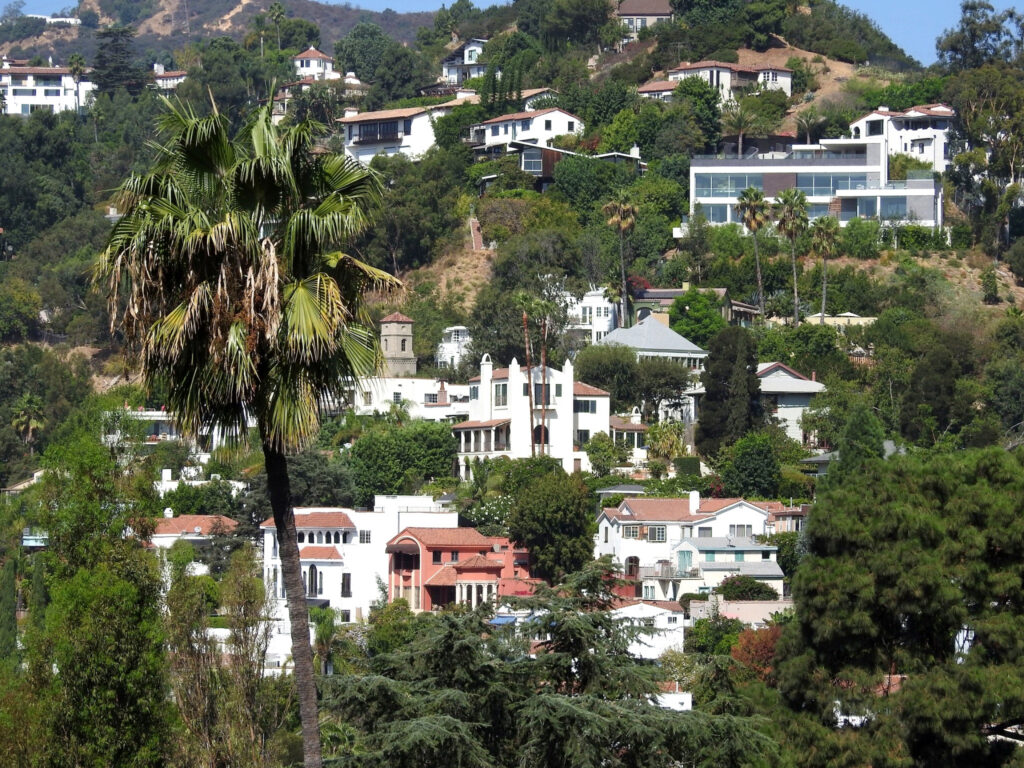
Whitley Heights was the deliberate creation of Hobart Johnstone Whitley, the developer often called a father of Hollywood, who assembled this hillside above Franklin Avenue and set out to build a Mediterranean hill town in Southern California. He sent his architect, A.S. Barnes, to study villages in Italy and the Mediterranean; Barnes returned to design most of the houses raised here between 1918 and 1928, and the subdivision formally opened in June 1920. The result was less a tract than a stage set with plumbing: stucco volumes stacked on the grade, clay tile roofs, arched openings, and streets that curl around the hill instead of gridding over it.
The village form survives in the details: shared retaining walls, public stair-streets that shortcut between switchbacks, garages that are scarce, detached or wedged under living rooms, and houses that meet the sidewalk with courtyard walls rather than lawns. Streets like Whitley Terrace, Milner Road, Wedgewood Place, Grace Avenue and Emmet Terrace carry most of the single-family stock; the district's northern remnant, across the freeway near Cahuenga, holds more multi-family buildings. Interiors have been renovated endlessly, but the streetscape reads remarkably close to its 1920s photographs — which is precisely what the preservation machinery described below exists to keep.
The neighborhood's defining wound came in the late 1940s, when the Hollywood Freeway was driven through the hill and roughly four dozen houses — 49 by the most common count — were demolished. The 101 severed the district into two pieces: the larger southern section, holding about eighty percent of what remains, and a smaller pocket toward Cahuenga Boulevard. That loss did lasting work on Los Angeles preservation politics; the residents who organized as the Whitley Heights Civic Association became early, persistent advocates for protecting what survived, and their efforts led directly to the designations that now govern the neighborhood.
Get the dates right, because sources scramble them. Whitley Heights was listed on the National Register of Historic Places on August 19, 1982 — the first historic district in Hollywood. Its city Historic Preservation Overlay Zone came a decade later, adopted in 1992 according to Los Angeles City Planning and the civic association, though you will see 1982 and 2004 printed elsewhere; it was among the city's earliest HPOZs, after Angelino Heights (1983) and South Carthay. In practice the HPOZ means exterior work visible from the street — windows, doors, roofing, stucco, walls, additions — passes through preservation review before permits issue.
Living here asks for specific tolerances: narrow streets shared with Hollywood Bowl overflow on summer nights (permit parking mitigates it), stair access to some front doors, and renovation timelines that build in HPOZ review. Owners of contributing houses should ask about Mills Act eligibility, which can meaningfully change carrying costs on a designated property, and every buyer should pull the district survey to learn whether a specific house is a contributor before planning changes. Confirm LAUSD school assignments by address — the elementary boundary in this pocket of the hills is exactly the kind of detail that shifts — and tour on a weekend evening to hear the freeway honestly.
Life Here

Public staircases thread between the switchbacks, a pedestrian shortcut system left over from the 1920s when many houses were built without garages.
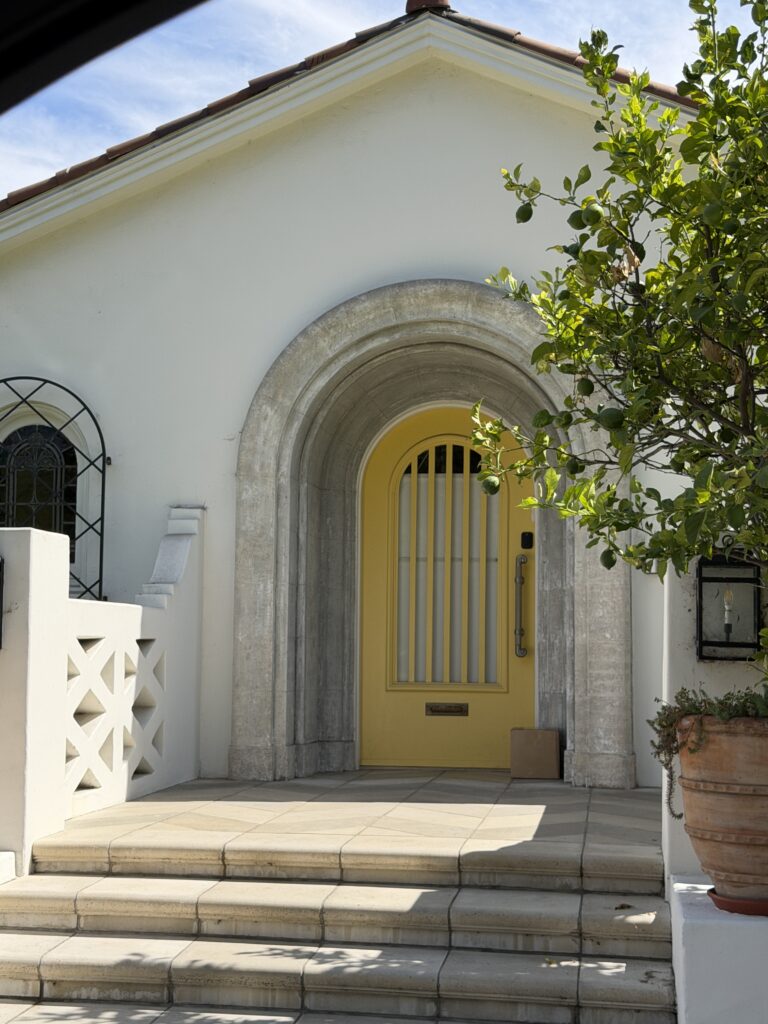
Whitley sent architect A.S. Barnes abroad to study hill towns before drawing these houses; the tile, stucco and arches are the original program, not a renovation trend.

National Register listing in 1982 and a city HPOZ since 1992 give the district two layers of protection — and buyers two sets of rules to read.
Education
Elementary boundaries around the Cahuenga Pass split block by block; run any address through LAUSD's Resident School Identifier and confirm details with each school before deciding.
Common Questions
Keep Exploring
Work With Ben
Contributor houses here change hands infrequently and often quietly, so ask Ben which Whitley Heights homes are available off market.
Start the ConversationBen will reach out shortly to set up your tour.