Home / Neighborhoods / Windsor Square
Windsor Square Homes for Sale
The historic core at its most complete: protected estates, deep lawns, and Larchmont Village at the corner.
Home / Neighborhoods / Windsor Square
The historic core at its most complete: protected estates, deep lawns, and Larchmont Village at the corner.
About the Neighborhood
Windsor Square was subdivided in 1911 from former Rancho La Brea land by the Windsor Square Investment Company, which planned a district of large houses on lots with one-hundred-foot frontages and marketed it, in the promotional language of the day, as the most exclusive subdivision yet offered in Los Angeles. The neighborhood association credits the tract as an early — by its account, the city's first — subdivision with utility lines buried underground. The blocks filled through the 1910s and 1920s as Wilshire Boulevard pushed west from downtown, and the Windsor Square Association, organized in the mid-1920s, still runs tree-planting and preservation programs today.
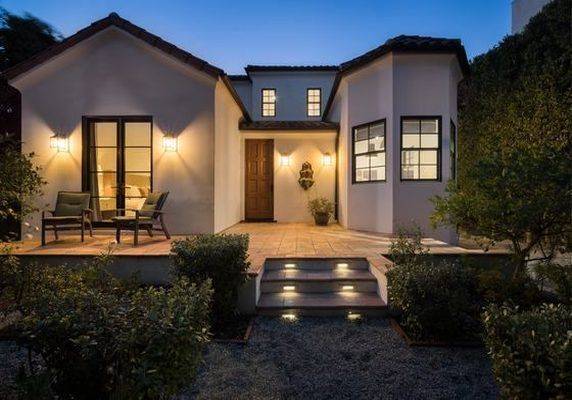
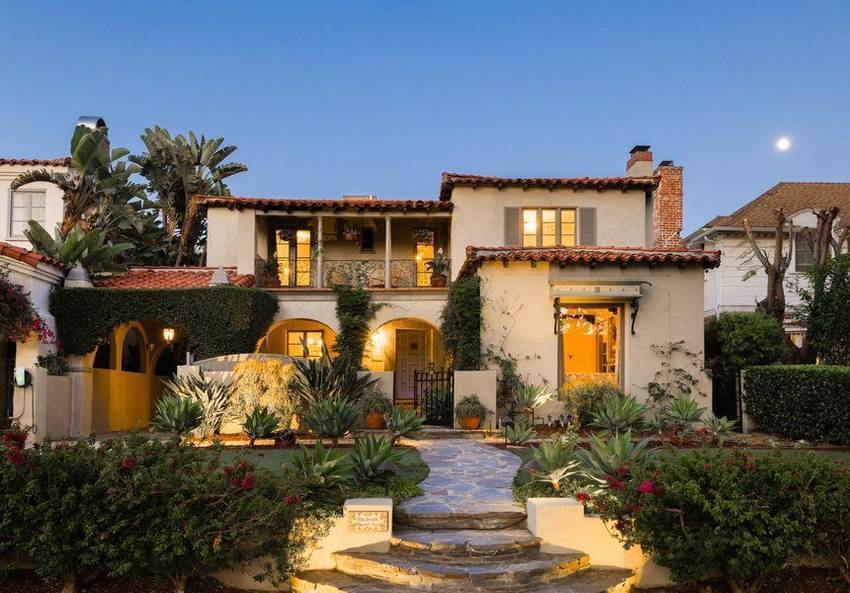
The stock spans early Craftsman and Beaux Arts houses through the full Period Revival catalogue — Tudor, English, Spanish Colonial, Mediterranean, French, and American Colonial — with scattered Ranch-era and later infill on remnant lots. Between Wilshire and Beverly, from Van Ness west to Arden, two-story houses sit on deep lawns with detached garages under mature street trees. The best-known address is the Getty House, a 1921 Tudor Revival at 605 South Irving Boulevard, given to the city by Getty Oil in 1975 and serving as the mayor's official residence since Tom Bradley moved in at the start of his second term in 1977.
Since 2004 the whole neighborhood has sat inside the Windsor Square HPOZ, among the city's larger historic districts, with a preservation plan revised in 2019. In practice, exterior work visible from the street — windows, additions, hardscape, demolition — goes through review against the plan's standards, while interior work and much of what happens behind the house moves faster. Accessory dwelling units are possible with compatibility review. Contributor versus non-contributor status determines how much flexibility a given parcel has, and it is recorded in the district's historic resources survey, so pull that sheet before planning a renovation or offering on a fixer.
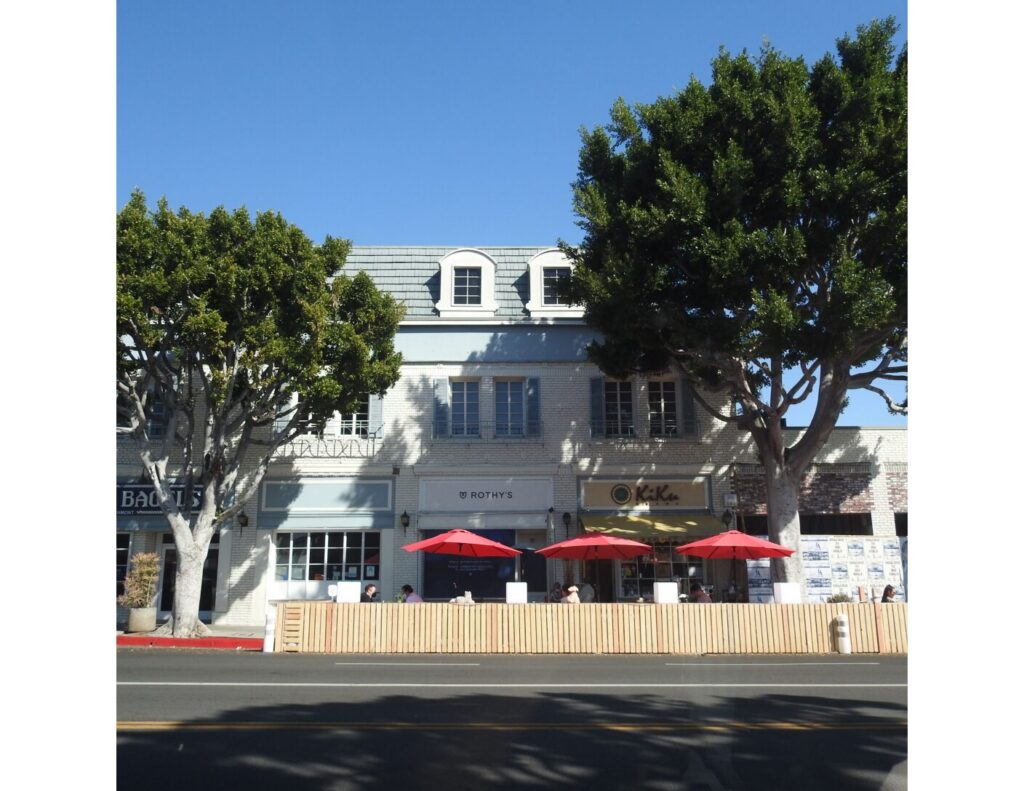
Living here means Larchmont Boulevard as the default errand — the shopping street begins at the district's northern edge — with Hancock Park immediately west and Koreatown's density immediately east. The Ebell of Los Angeles, a 1927 clubhouse and theater, anchors the Wilshire flank, where offices and high-rises line the boulevard's south side. Streets are quiet, wide, and canopied, and the association plants and maintains parkway trees. Transit reached closer in May 2026, when the D Line subway extension opened west of the long-standing Wilshire/Western station. Occasional civic events at the Getty House are part of the deal on Irving Boulevard.
Verify four things early. First, the parcel's contributor status and what the preservation plan says about its style; that shapes windows, additions, and even fences. Second, school assignment, which follows the parcel — Third Street Elementary serves much of the area, but confirm the address. Third, the southern edge: parcels near Wilshire sit against commercial zoning, and corridor development can change light and traffic. Fourth, the age of what you cannot see — many houses here predate 1920, so budget inspections for sewer laterals, foundations, and original wiring. HPOZ review adds weeks to permit timelines; build that into any renovation plan.
Life Here
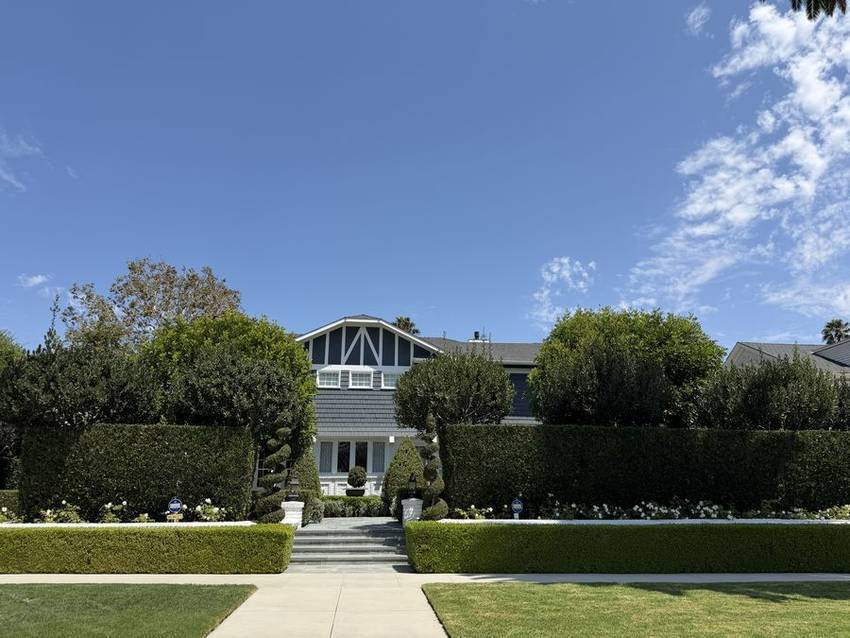
The overlay keeps the streetscape intact, and values follow. What you buy is what the block stays.
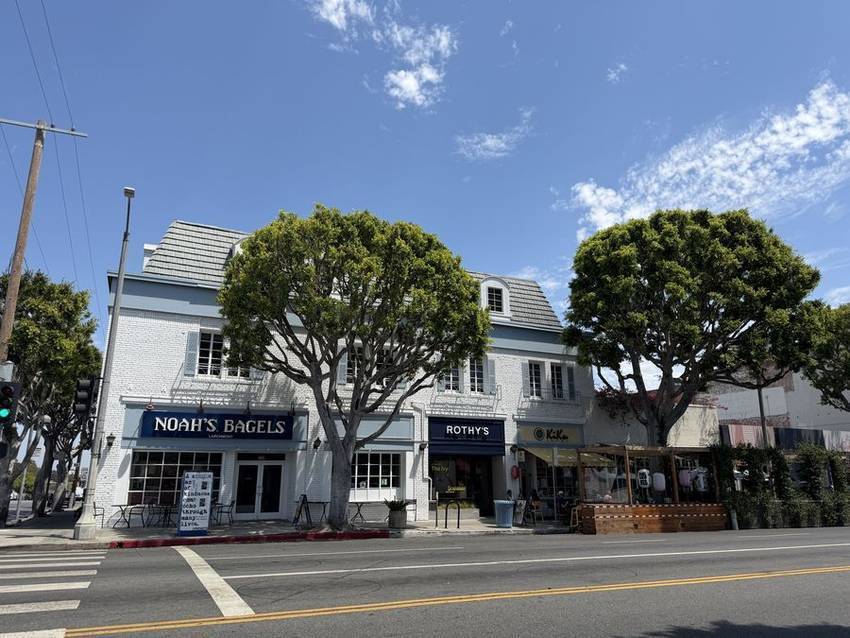
The village sits at the neighborhood’s edge: coffee, bookstores and the Sunday market on foot.
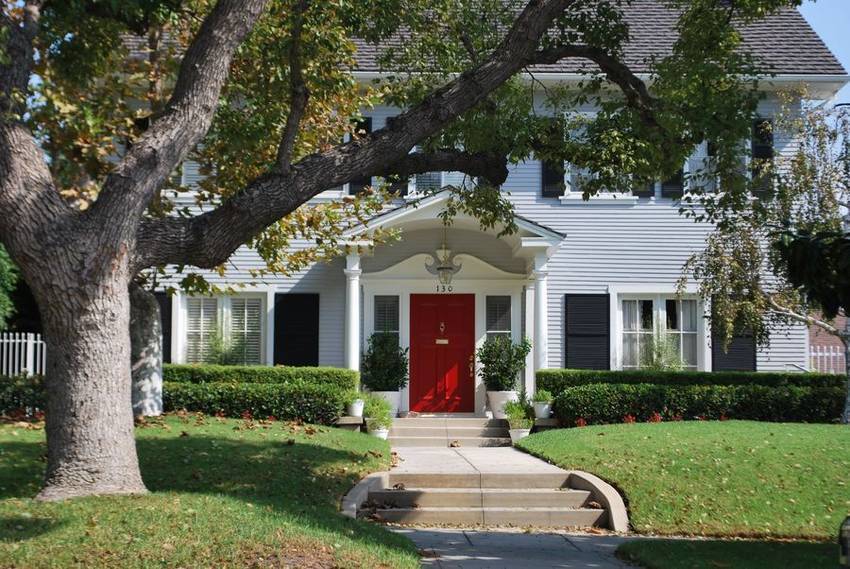
Deep lots and wide frontages laid out in the 1910s, the kind of land that simply does not come up anymore this close to the center of the city.
History
Windsor Square's paper trail is unusually complete. The Windsor Square Land Company assembled two hundred acres of former Rancho La Brea in 1885 at $400 an acre; in 1911 it sold to the Windsor Square Investment Company, headed by developer Robert A. Rowan, for roughly $1,000,000, or $5,000 an acre, and Rowan's firm surveyed and recorded the tracts that year. The historical society documents some $200,000 in improvements: wide streets, planted parkways, ornamental electroliers marked with the WS monogram, and utilities run out of sight. The city's preservation plan calls Windsor Square the first area in Los Angeles with buried power lines, a remarkable claim for 1911. The original section opened in 1913, and New Windsor Square followed in April 1920, extending toward Larchmont and Beverly.
Getty House condenses the neighborhood's civic arc. Built in 1921 for Leta and Paul Paulson on an acre at 605 South Irving Boulevard, the English Tudor is credited by the Getty House Foundation to the firm behind Hollywood's Egyptian and Chinese theatres. Getty Oil acquired the property in 1958 and gave it to the City of Los Angeles in 1975, and on July 13, 1977 it became the official residence of the mayor. Tom Bradley lived there for sixteen years; Richard Riordan declined the house; Antonio Villaraigosa, Eric Garcetti, and Karen Bass have each made it home, with the Getty House Foundation, organized in 1993, stewarding restoration and public programs. That the mayor's residence sits on an ordinary Windsor Square block remains the neighborhood's quietest boast.
Preservation formalized what deed restrictions, in force until 1965, had long enforced. The City Council adopted the Windsor Square Historic Preservation Overlay Zone in 2004, following a district-wide survey completed in 2003, and the numbers explain its standing: 1,169 parcels between Beverly and Wilshire, Van Ness and Arden, of which roughly 89 percent are contributing structures, placing it among the larger of the city's thirty-five HPOZs. A revised preservation plan adopted in 2019 now governs review, with a period of significance running from 1906 to 1965. The Windsor Square Association, meanwhile, continues the work it began in the 1920s: parkway trees, streetlight stewardship, and the sustained argument that the 1911 plan got it right the first time.
Architecture
The stock reads block by block. The boulevard blocks, Windsor, Lorraine, and Plymouth, with Irving alongside, carry the grandest frontages, where the original hundred-foot lots produced two-story Tudor, Mediterranean, and Colonial Revival houses of near-estate scale. The southern blocks toward Wilshire belong to the earliest build-out, with Craftsman and Beaux Arts-inflected houses of the 1910s appearing among the revivals and the Ebell of Los Angeles's 1927 clubhouse anchoring the boulevard flank. North toward Beverly, the New Windsor Square blocks of 1920 onward run slightly later and slightly tighter, nearer Larchmont's shops. The catalogue the city records, Craftsman through Tudor, Spanish, French, and American Colonial, is complete here, but the proportions shift street to street.
The names hold up under survey scrutiny. The city's preservation plan credits Windsor Square houses to Paul Revere Williams; to Walker & Eisen, the downtown firm whose commercial buildings defined 1920s Los Angeles; to Arthur Kelly; and to Johnson, Kaufmann & Coate, the early-1920s partnership of Reginald Johnson, Gordon Kaufmann, and Roland Coate, each of whom became a defining domestic architect of the period. Attribution matters practically here, because the HPOZ's historic resources survey records each parcel's style, date, and status, so a claimed architect can usually be checked against the file rather than taken on listing-copy faith. For buyers of historic homes in Los Angeles, that depth of documentation, rare elsewhere, is part of what Windsor Square sells.
The review process is more navigable than its reputation. Routine maintenance and in-kind repair on contributing houses proceeds as conforming work, many minor projects are delegated to the Director of Planning for streamlined sign-off, and the board acts in an advisory role on new construction, with the preservation plan supplying the standards everyone designs against. In practice the board's questions are consistent: is street-visible original fabric, from windows to cladding to porches, being kept or matched; does an addition stay subordinate to the historic house; do the materials hold the block's line. Owners who arrive with the survey sheet, photographs, and a proposal written in those terms usually find the process a schedule item rather than an adversary.
Understanding the Market
Windsor Square trades in the same orbit as Hancock Park, and buyers should resist neat rules about which commands more. The honest distinctions are structural: Hancock Park has the country-club frontage and its fairway premiums, while Windsor Square has the earlier plat, the hundred-foot boulevard frontages, and a higher share of pre-1920 fabric. Both districts are governed by HPOZs with strong contributing majorities, both feed the same Larchmont daily life, and in most buyers' minds they function as one continuous historic-core market in which the block face, the specific house, and its documentation set the price. When comparable houses from each district compete for the same buyer, provenance and condition, not the neighborhood name, tend to decide it.
Preservation discipline is the market's underwriting layer. Contributing status, which covers roughly nine parcels in ten, determines the renovation path, so the survey sheet belongs in escrow alongside the inspection: it establishes what the house is on record as being, and therefore what the street face is expected to remain. For renovators, the practical math is timeline and team, since HPOZ review adds sequence to permitting, and architects who know the plan's standards recover that time in fewer revision cycles. What buyers receive in exchange is a supply lock: no speculative teardowns, no out-of-scale replacements next door, and a streetscape whose consistency compounds over decades. Windsor Square homes for sale are scarce by design, and the design is the value.
Guidance for buyers is concrete. Walk the block at both ends of the day, because the boulevard blocks, the Larchmont-adjacent north, and the Wilshire-facing south each carry different light, traffic, and noise signatures, and the southern parcels sit nearest the boulevard's commercial zoning. Underwrite century-old systems without sentiment: sewer laterals, foundations, wiring, and the roof's true history. Confirm what prior owners changed with and without approval, since the unpermitted window swap is the classic HPOZ inheritance. And think in decades. This is a hold market where families stay and inventory runs thin, and the buyer who moves decisively on a documented, well-kept contributor is usually rewarded. Buying here means buying the plan of 1911, maintained by covenant, association, and overlay ever since.
Micro Neighborhoods
The boulevard blocks are the tract's showpieces: Windsor, Lorraine, and Plymouth boulevards, with Irving alongside, where the original plan's largest frontages produced deep lawns and two-story revival houses of near-estate scale. Getty House anchors Irving, lending these streets an occasional civic rhythm of receptions and holiday gatherings. Canopy, parkway width, and setback consistency reach their maximum here, and so does demand. These are the addresses buyers picture when they search Windsor Square homes for sale, and full-scale houses on the boulevards surface rarely enough that each sale becomes the block's reference point for years afterward.
The northern blocks, platted as New Windsor Square from 1920, run up toward Beverly Boulevard and read slightly later and slightly tighter than the boulevards: 1920s period revivals on generous but not colossal lots, with the occasional earlier house among them. Their card is proximity. Larchmont Boulevard's shops, farmers market, and coffee lines sit at the district's northern doorstep, so these streets carry the strongest walkability premium in the neighborhood. For buyers who want the HPOZ's protections joined to a village routine, school runs, the bookstore, the Sunday market on foot, this is the micro-market to watch.
The southern blocks hold the tract's earliest chapters, with 1910s Craftsman and Beaux Arts-inflected houses mixed among the 1920s revivals and the Ebell of Los Angeles's 1927 clubhouse and theater marking the Wilshire flank. The boulevard brings assets, including the D Line subway and a straight shot to the Miracle Mile museums, and considerations: commercial zoning along the southern edge, corridor traffic, and taller neighbors across Wilshire. Parcels a block or two inside the district capture the connectivity without the exposure. Fremont Place's gated enclave sits just south across Wilshire, a reminder that this quarter of the city built privately as well as grandly.
Hancock Park lies immediately west, its 1920s plan wrapped around the Wilshire Country Club's Norman Macbeth course and protected since 2008 by its own HPOZ of roughly 1,200 properties. The two districts share architects, styles, the deep-setback discipline, and the Larchmont routine, and most buyers shop them as one continuous historic core. The differences sit at the margins: Hancock Park offers fairway-facing parcels and a slightly later, more uniform 1920s stock, while Windsor Square answers with earlier houses and the boulevards' hundred-foot frontages. Serious searches for historic homes in this part of Los Angeles almost always cover both.
View Hancock ParkLarchmont Boulevard begins at Windsor Square's northern edge, and its shopping blocks, developed by Julius La Bonte from 1921, remain the neighborhood's common ground: small storefronts, Chevalier's Books in business since 1940 and counted among the city's oldest independent bookstores, a Sunday farmers market, and a school-run rhythm that gives the historic districts their daily pulse. The surrounding Larchmont Village blocks carry smaller 1920s houses, duplexes, and bungalows that trade as the area's entry point, often to buyers intending to graduate into Windsor Square or Hancock Park later. For Windsor Square owners, the boulevard is simply an extension of home, with errands measured in blocks rather than miles.
View LarchmontEducation
School assignment follows the parcel, not the neighborhood name, and both elementary and secondary boundaries in this part of the city have moved before. Confirm any address with LAUSD's Resident School Identifier and with the school itself.
Common Questions
Work With Ben
Inventory here is famously scarce. Tell Ben what you are looking for and hear when something is coming, including off market.
Start the ConversationBen will reach out shortly to set up your tour.