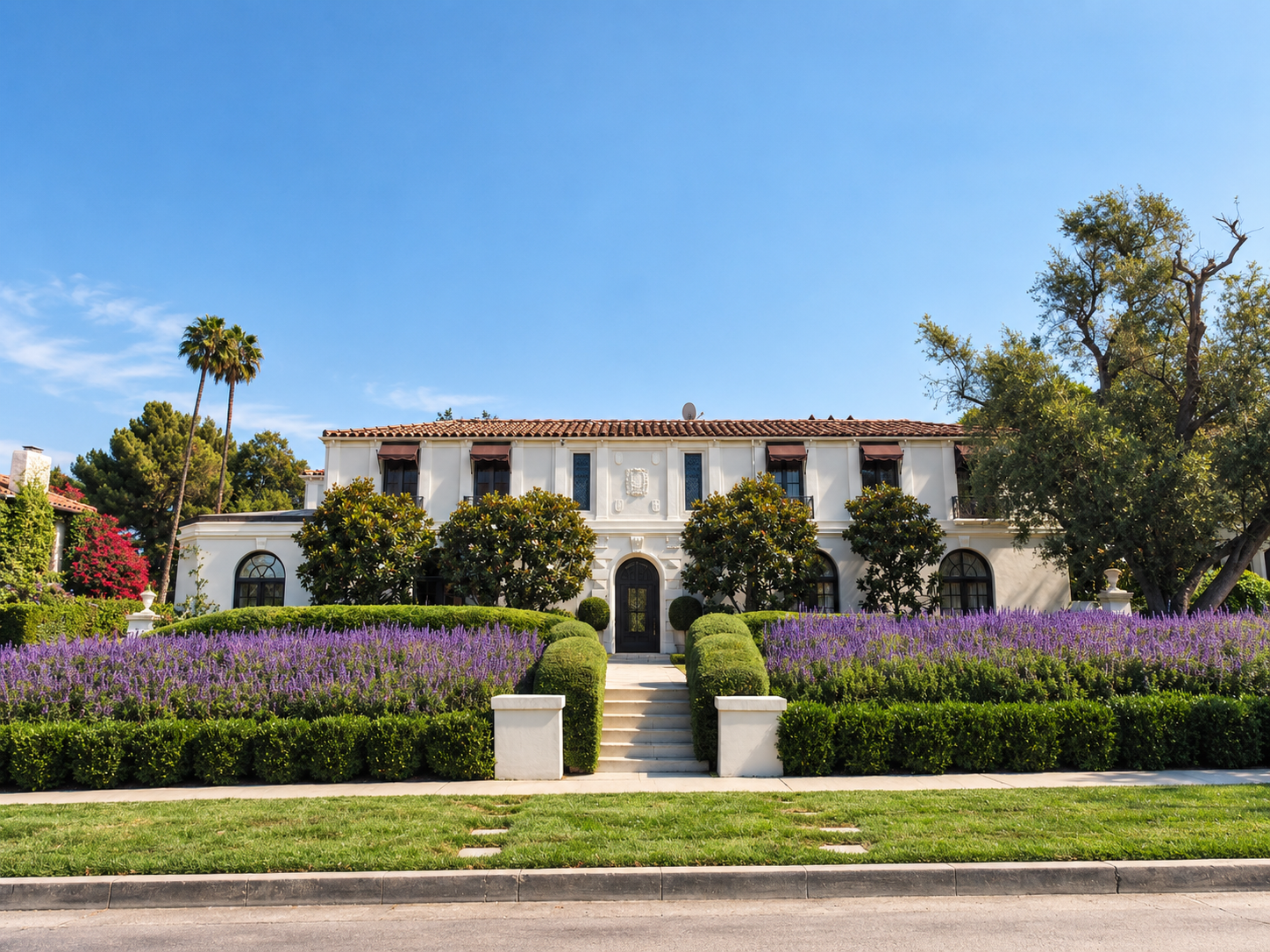
Home / Neighborhoods / Hancock Park
Hancock Park Homes for Sale
One of the great historic neighborhoods of Los Angeles, where grand estates line quiet streets minutes from the center of everything.
Home / Neighborhoods / Hancock Park
One of the great historic neighborhoods of Los Angeles, where grand estates line quiet streets minutes from the center of everything.
About the Neighborhood
Hancock Park sits on part of the old Rancho La Brea, purchased by Major Henry Hancock in 1863. His son, oil developer G. Allan Hancock, subdivided the family land in the 1920s, funding the venture with petroleum proceeds and setting unusually strict conditions: substantial two-story houses, 50-foot front setbacks, and side driveways running through porte cocheres to rear garages. The Wilshire Country Club, opened at the district's heart in 1920, anchored the plan. Prominent architects of the era filled the tract with Period Revival houses, and the neighborhood became one of the city's defining examples of 1920s estate-scale subdivision.
The housing stock is remarkably consistent because of those origins. Streets between Highland and Rossmore, Melrose and Wilshire carry Tudor Revival, Spanish Colonial Revival, Mediterranean, Monterey and American Colonial Revival houses, almost all two stories, on deep lots with mature street trees and the signature uniform setback line. Teardowns are rare and the block face reads much as it did before the war. Apartment and condominium stock sits at the edges, along Rossmore's handsome 1920s towers and the Wilshire corridor, while the single-family core remains intact in a way few Los Angeles neighborhoods can claim.
What governs building here is the Historic Preservation Overlay Zone the City Council adopted in 2008. In practical terms, an HPOZ means exterior work visible from the street on contributing properties is reviewed against the Hancock Park Preservation Plan before permits issue: window replacement, additions, hardscape and demolition all go through the HPOZ board, which meets twice monthly, while interior remodeling is generally outside its scope. For owners this adds process and argues for preservation-literate architects, but it also protects the setting that supports values. Contributing structures may be eligible for Mills Act property-tax contracts, which is worth investigating early.
The practical texture is central-city convenience with a residential hush. Larchmont Village, the low-rise shopping street on the district's eastern edge, supplies the coffee, bookstore and Sunday farmers market routine; Wilshire Boulevard and its Metro D Line stations sit along the southern boundary, putting downtown and the Miracle Mile museums within easy reach. Adjacent Windsor Square, itself an earlier HPOZ, extends the same architecture eastward. The trade-offs are city ones: through-traffic on major streets, and 1920s infrastructure, from clay sewer laterals to original electrical, that renovation budgets must respect.
Buyers should verify, first, whether the parcel lies inside the HPOZ boundary and whether it is a contributing or non-contributing structure, since that determines the review path for any exterior plans. Ask for permit history and be alert to unpermitted alterations, common in houses of this age. Standard 1920s diligence applies: foundation, plumbing, knob-and-tube wiring, and sewer scope. Confirm Mills Act eligibility if tax relief matters to your plans. Finally, check school assignment address by address, since Hancock Park's LAUSD boundaries for elementary and secondary schools shift at major streets and are frequently misstated in listings.
Life Here
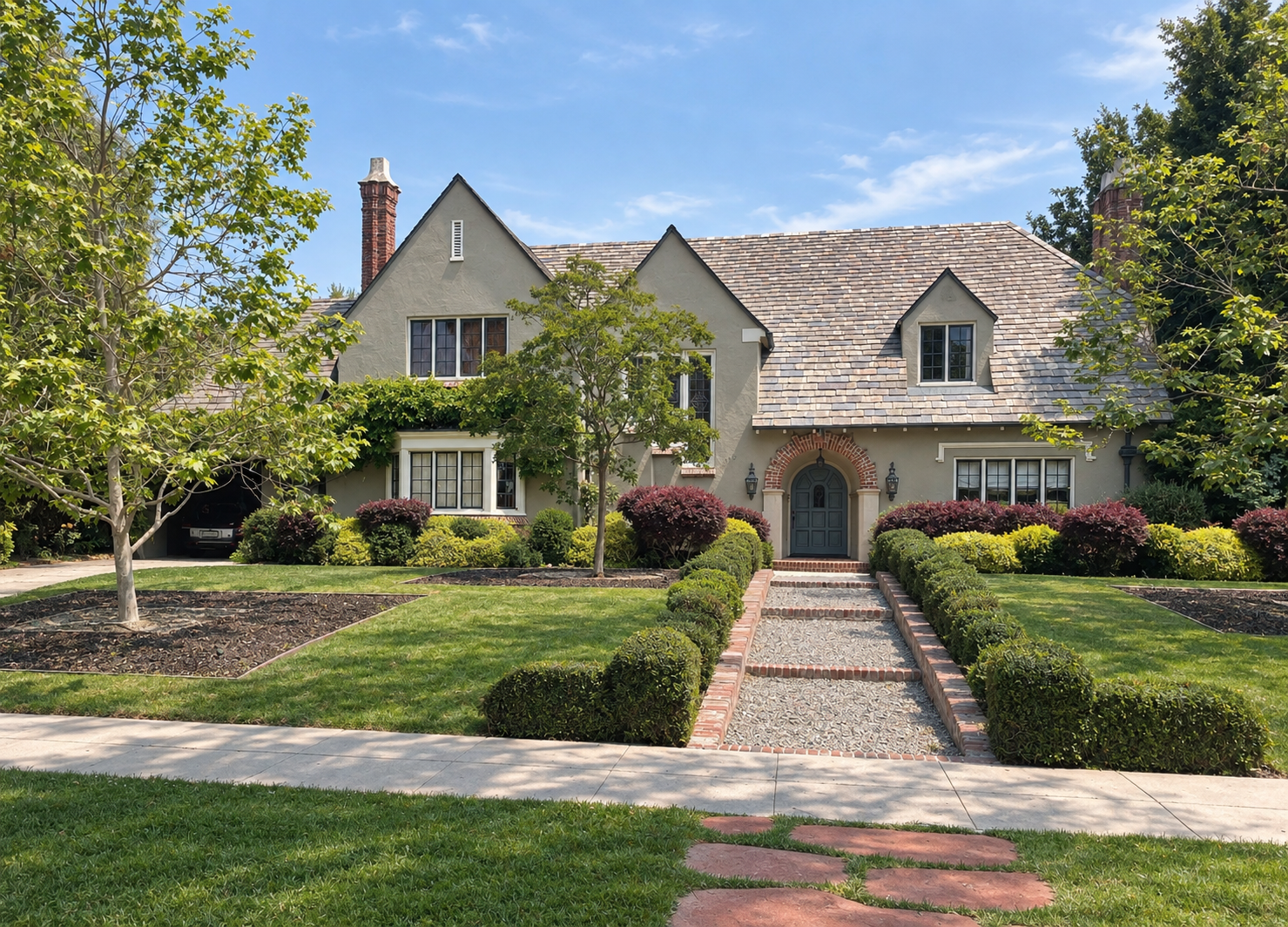
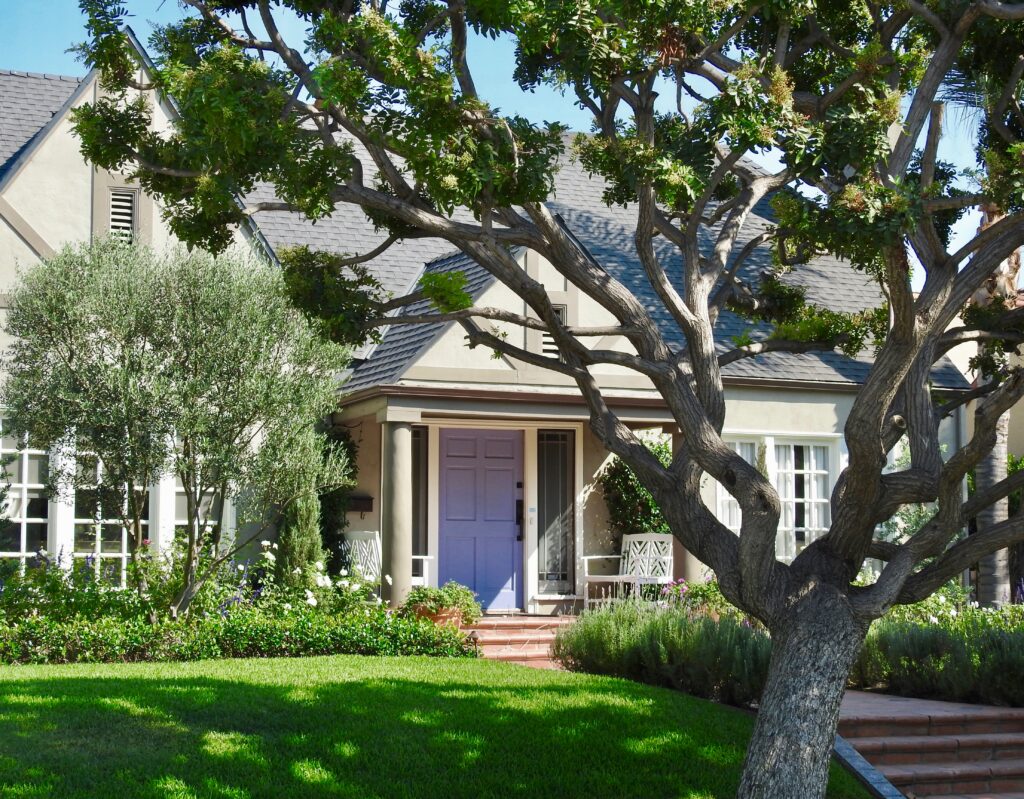
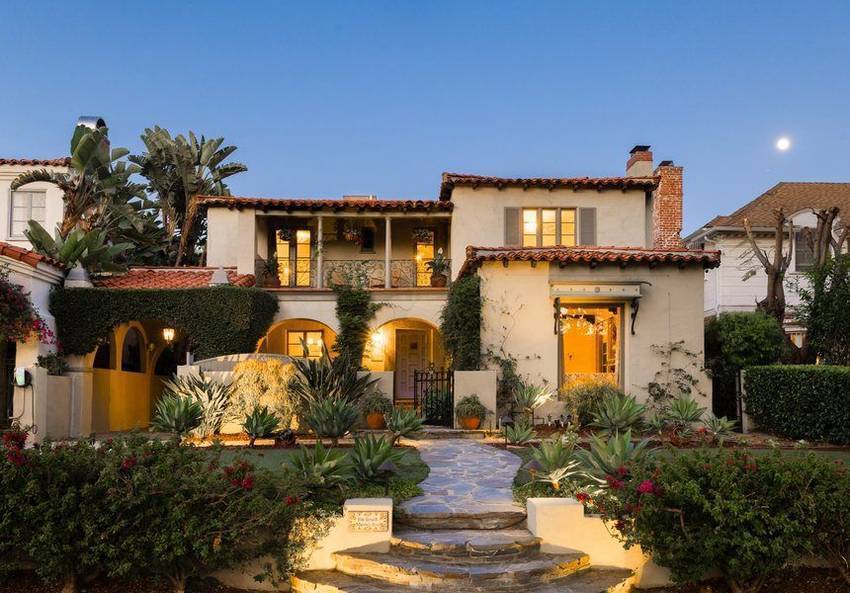
Tudor, Spanish and English Revival estates from the 1920s, protected and lovingly kept. These are houses that no one builds anymore, on lots that no longer exist elsewhere in the city.
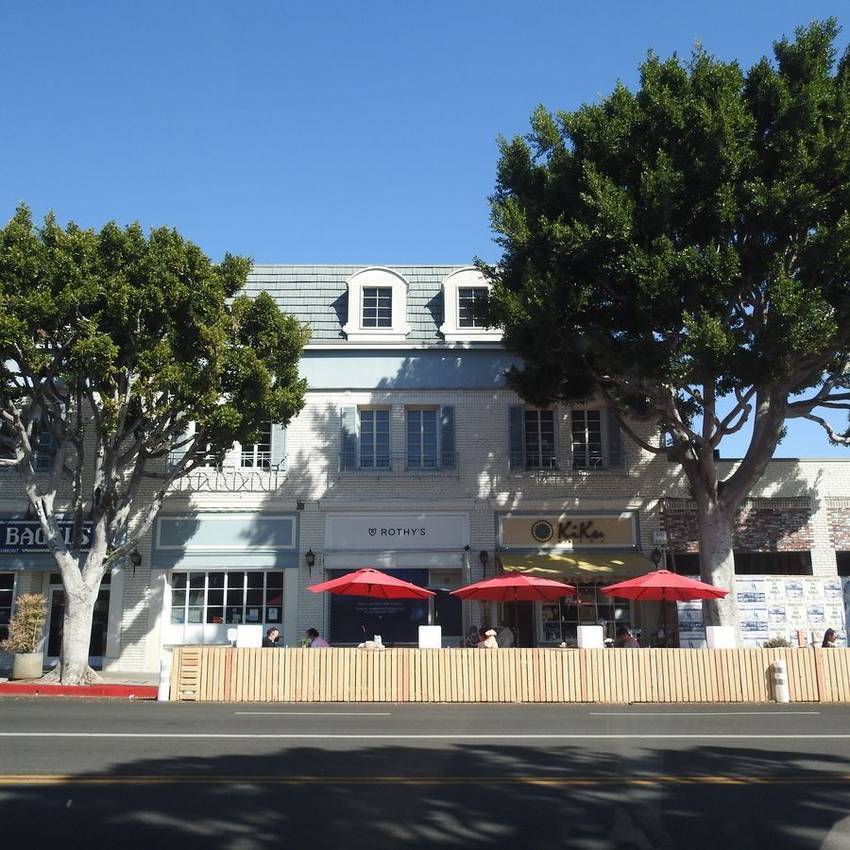
The neighborhood's main street in all but name. Coffee, bookshops, the Sunday farmers market and restaurants where the staff know your order, a short walk from home.
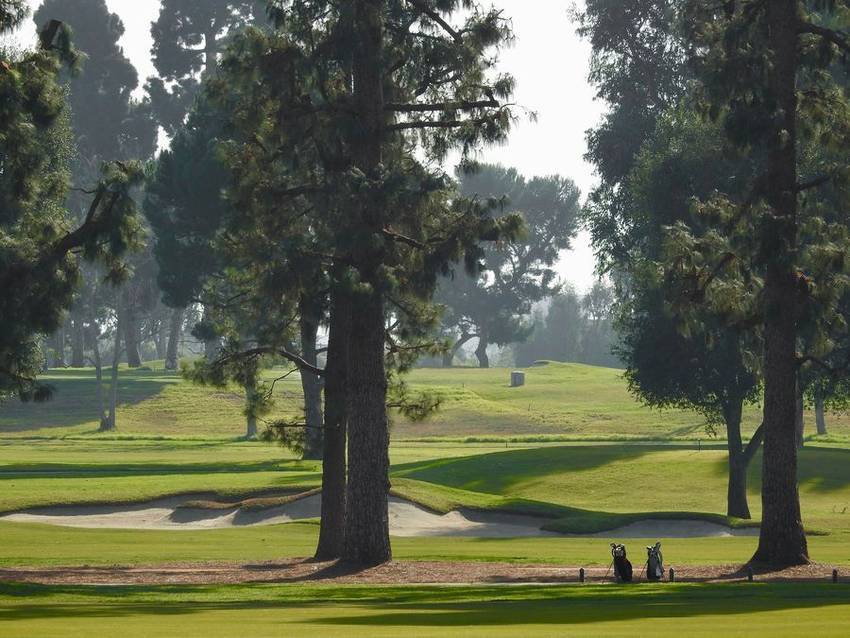
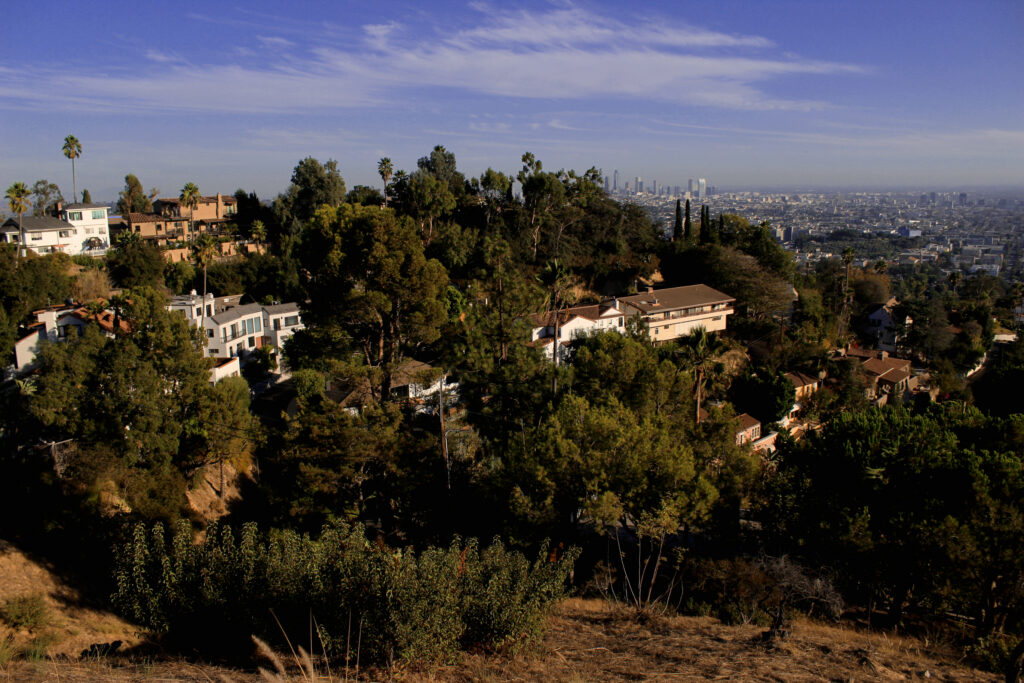
Hancock Park sits at the center of the map. Hollywood and Downtown to the east, Beverly Hills and the Westside beyond, with the Wilshire Country Club as your green heart.
History
Hancock Park is the product of a single family's landholding and a single decade's ambition. Major Henry Hancock acquired Rancho La Brea in 1863; his son G. Allan Hancock, whose fortune came from the rancho's oil fields, subdivided the family land in the 1920s between Highland and Rossmore, Melrose and Wilshire. The Wilshire Country Club came first, founded in 1919 with a Norman Macbeth course that opened in 1920, and the residential plan was written around it. Hancock's development compact was exacting: concrete streets, utilities run behind the houses, fifty-foot setbacks from the curb, and, by the historical society's account, a $100,000 gift to extend the Pacific Electric line along Third Street to La Brea so the new district would be reachable from downtown.
The neighborhood's early exclusivity had an ugly legal architecture: racially restrictive covenants barred non-white buyers here, as they did across much of Los Angeles. In 1948, the year the Supreme Court's Shelley v. Kraemer decision rendered such covenants unenforceable, Nat King Cole purchased 401 South Muirfield Road for $85,000. Some neighbors organized to force the family out; there were buyout offers, threats against the Coles and their agent, and documented incidents that included the poisoning of the family's dog. The Coles stayed. Nat King Cole lived on Muirfield until his death in 1965, and Maria Cole remained into the 1970s. The episode is now taught as a landmark of fair-housing history, and the neighborhood's own historians recount it plainly rather than politely forgetting it.
Preservation became policy in 2008, when the City Council adopted the Hancock Park Historic Preservation Overlay Zone after years of debate over teardowns, roughly 1,200 properties reviewed against a dedicated preservation plan. The designation formalized what the blocks already showed: a 1920s period-revival district of unusual completeness, home over the decades to figures the city's own report names, from Howard Hughes to architect William Pereira. Today's preservation culture runs deep. The Windsor Square-Hancock Park Historical Society documents the houses, the homeowners association traces its founding to 1948, and owners of contributing houses increasingly pair renovation with Mills Act tax contracts. That accumulated stewardship is why the streetscape still reads much as Hancock's deed restrictions intended a century ago.
Architecture
The roster is the point. The historical society records that Hancock brought in architects including Paul R. Williams, A. C. Chisholm, and John Austin to design homes for the new tract, and the Paul R. Williams Project documents Williams commissions in Hancock Park, among them the William Banning residence and speculative houses built on the neighborhood's rising reputation. The city's designation materials catalogue the styles: Tudor and English Revival, Spanish Colonial Revival, Mediterranean, Monterey, and American Colonial Revival, nearly all of it two stories and architect-designed for the professional families of 1920s Los Angeles. Williams's presence carries a painful irony, since he designed for streets whose covenants would have barred him from living on them, a fact the neighborhood's historians now state directly.
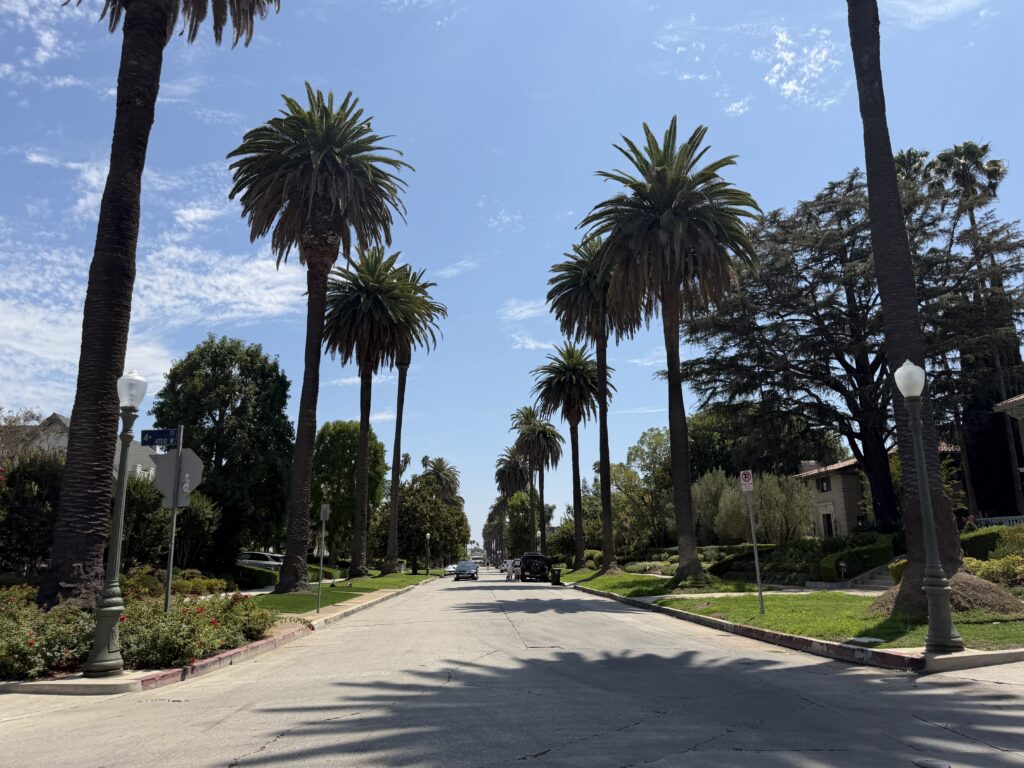
What defines Hancock Park's stock is discipline more than any single style. The fifty-foot setback line runs unbroken, so every house, whether Tudor, Spanish, or Colonial, shares the same deep lawn plane, and the block reads as a composition. Driveways run to the side, often through porte cocheres to rear garages, keeping facades uninterrupted by garage doors. Parkways are wide, the street trees mature, the streets were poured in concrete from the start, and the two-story scale is nearly universal. Lots are deep rather than merely wide, which is why rear additions, pool houses, and accessory buildings have absorbed a century of growing space needs without disturbing what the street sees. It is period-revival urbanism at its most complete: historic homes in Los Angeles at full neighborhood scale.
The HPOZ shapes renovation in predictable, learnable ways. Street-visible exterior work on contributing houses is reviewed against the Hancock Park Preservation Plan, so original windows, cladding, and rooflines are conserved or matched rather than swapped, and additions succeed when they step down behind the ridgeline and borrow the house's materials. The rear of the lot is where flexibility lives; garages, accessory units, pools, and family-room extensions generally move faster than anything facing the street. Owners who engage preservation-literate architects early, and who bring the board a documented, style-consistent proposal, tend to find the process orderly, while owners who design first and consult later do not. The result, visible on every block, is renovation without erasure.
Understanding the Market
The market has a legible hierarchy. The blocks fronting the Wilshire Country Club, Rossmore's club-facing stretch and the fairway-adjacent reaches of June Street and Muirfield Road, generally carry the district's largest houses and parcels, and course adjacency functions as this neighborhood's version of a view premium. Interior streets between Highland and Rossmore trade close behind, with block face and architectural pedigree mattering more than any simple geographic rule. At the edges the product changes: Rossmore's handsome 1920s apartment towers and the Wilshire corridor offer the only meaningful non-single-family stock. Within the core, provenance, whether a named architect, an intact facade, or a documented restoration, is the most reliable multiplier in Hancock Park real estate.
The HPOZ's market effect is best described as enforced scarcity. Because demolition and street-visible alteration are reviewed, the supply of intact 1920s houses cannot be diluted by speculative replacement, and the setting that gives any single house its value is protected by every neighbor's compliance. That discipline removes shortcut renovations from the flip economy, which thins speculative buyers but deepens the pool of owners who want exactly this. Renovated contributing houses with documented, approved work consistently draw stronger interest than deferred-maintenance peers, and the gap tends to persist because the deferred house faces the same review path plus time. Buyers should treat the designation not as a cost priced against the house, but as the mechanism keeping Hancock Park homes for sale scarce in the first place.
Guidance here starts with the file, not the floor plan: confirm contributing status, pull the permit history, and price the gap between as-is condition and an approved renovation, including a realistic timeline. Then walk to Larchmont Village. The boulevard's shops, farmers market, and school-run rhythm are a genuine component of value on the district's eastern blocks, and walkability differences show up in demand street by street. Factor the Wilshire edge as well: the D Line subway and the Miracle Mile museums are assets of the southern boundary, while the boulevard itself carries city traffic. Finally, underwrite 1920s systems honestly. Buyers who love the architecture but budget only for cosmetics are this market's most common casualty.
Micro Neighborhoods
Fremont Place is the gated exception in an ungated district: a private enclave announced in 1911 between Wilshire and Olympic, its ornate entrance gates designed by J. Martyn Haenke, its first house completed in 1915. Fewer than fifty home sites were platted, by the historical society's account, and the streets remain private behind staffed gates. Mary Pickford lived at 56 Fremont Place in 1918, and 55 Fremont Place is widely identified as Muhammad Ali's onetime home. Estate-scale Mediterranean and Colonial houses on parkland lots trade rarely here, and the gate itself, genuine privacy inside city fabric, is the premium.
View Fremont PlaceWindsor Square, immediately east, is Hancock Park's slightly older sibling, recorded in 1911 by Robert A. Rowan's Windsor Square Investment Company, marketed on hundred-foot frontages, and, by the city preservation plan's account, the first area in Los Angeles with power lines buried underground. Its HPOZ arrived in 2004, four years before Hancock Park's, covering nearly 1,200 parcels of Craftsman, Beaux Arts, and full period-revival houses. Getty House at 605 South Irving Boulevard has served as the mayor's official residence since 1977. The two districts trade as one market in most buyers' minds, differing at the block, not the brand.
View Windsor SquareLarchmont is the village the historic districts share. Julius La Bonte began developing the boulevard's shopping blocks in 1921, and his family long described it as the city's first neighborhood shopping center. The strip between Beverly and First still runs to small storefronts, Chevalier's Books, in business since 1940 and counted among the city's oldest independent bookstores, and a Sunday farmers market. The surrounding Larchmont Village blocks hold smaller-scale 1920s houses and duplexes that serve as the area's entry market. For Hancock Park buyers, Larchmont is the walkability engine: distance to the boulevard is a real line item in value.
View LarchmontBrookside, south of Wilshire between Highland and Muirfield, was established in 1921 by the Rimpau Estate Company on former Rancho La Brea land. It takes its name from the small creek, fed by springs on the old rancho, that by most accounts still threads several rear yards, a rarity in central Los Angeles. The stock is period revival at a friendlier scale than Hancock Park proper: Spanish, Tudor, and Colonial houses on comfortable lots along Longwood, Tremaine, and their neighbors. Brookside trades as the value-conscious route into the Hancock Park orbit, with a tight neighborhood identity of its own.
The country club blocks are Hancock Park's inner circle: the stretches of Rossmore Avenue, June Street, and Muirfield Road that face or back onto the Wilshire Country Club's 1920 Norman Macbeth course. Here the 1920s plan operates at full strength, with the district's largest parcels, fairway outlooks in place of rear neighbors, and houses built for the city's civic and industrial leadership, including addresses associated with Howard Hughes and, at 401 South Muirfield, Nat King Cole. Course-adjacent houses surface infrequently and command the district's deepest attention when they do. The club is private; the address premium does not depend on membership.
Education
Assignment follows the individual parcel, LAUSD boundaries in this part of the city shift at major streets and are revised over time, so confirm current resident schools with the district before making decisions.
Common Questions
Keep Exploring
Deciding between them? Read Hancock Park vs Windsor Square.
Further Reading
Work With Ben
Homes here often sell before they are ever listed. Tell Ben what you are looking for and hear about opportunities first, including off market.
Start the ConversationBen will reach out shortly to set up your tour.