Most people know Miracle Mile from the window of a car. It is the stretch of Wilshire Boulevard where the museums gather, where the Petersen’s ribbons of steel catch the afternoon light, and where traffic slows to a crawl on gala nights. What fewer people know is what sits one block off the boulevard: a grid of quiet residential streets holding some of the best prewar housing stock in the city, at prices that still make sense next to the neighborhoods around it.
This is a guide to Miracle Mile as a place to live rather than a place to visit. The two have less in common than you might think, and that gap is exactly where the opportunity sits.
Where Miracle Mile Begins and Ends
The commercial spine runs along Wilshire from roughly La Brea to Fairfax. The neighborhood most buyers mean when they say Miracle Mile is the residential district wrapped around it, mainly the streets south of Wilshire running down toward San Vicente and Olympic, plus a smaller pocket to the north. Streets like Cochran, Dunsmuir, Ridgeley and Masselin carry the rhythm of the place: duplexes and single family homes from the 1920s and 1930s, deep setbacks, mature trees, and remarkably little turnover.
The borders blur at the edges, which is part of the story. Cross Highland heading east and you are in the orbit of Hancock Park. Head north past Third and you are effectively in Beverly Grove. Southwest across San Vicente sits Carthay Circle. Miracle Mile is the hinge between them, and it trades at a discount to nearly all of them.
The Homes: Spanish Duplexes and HPOZ Streets
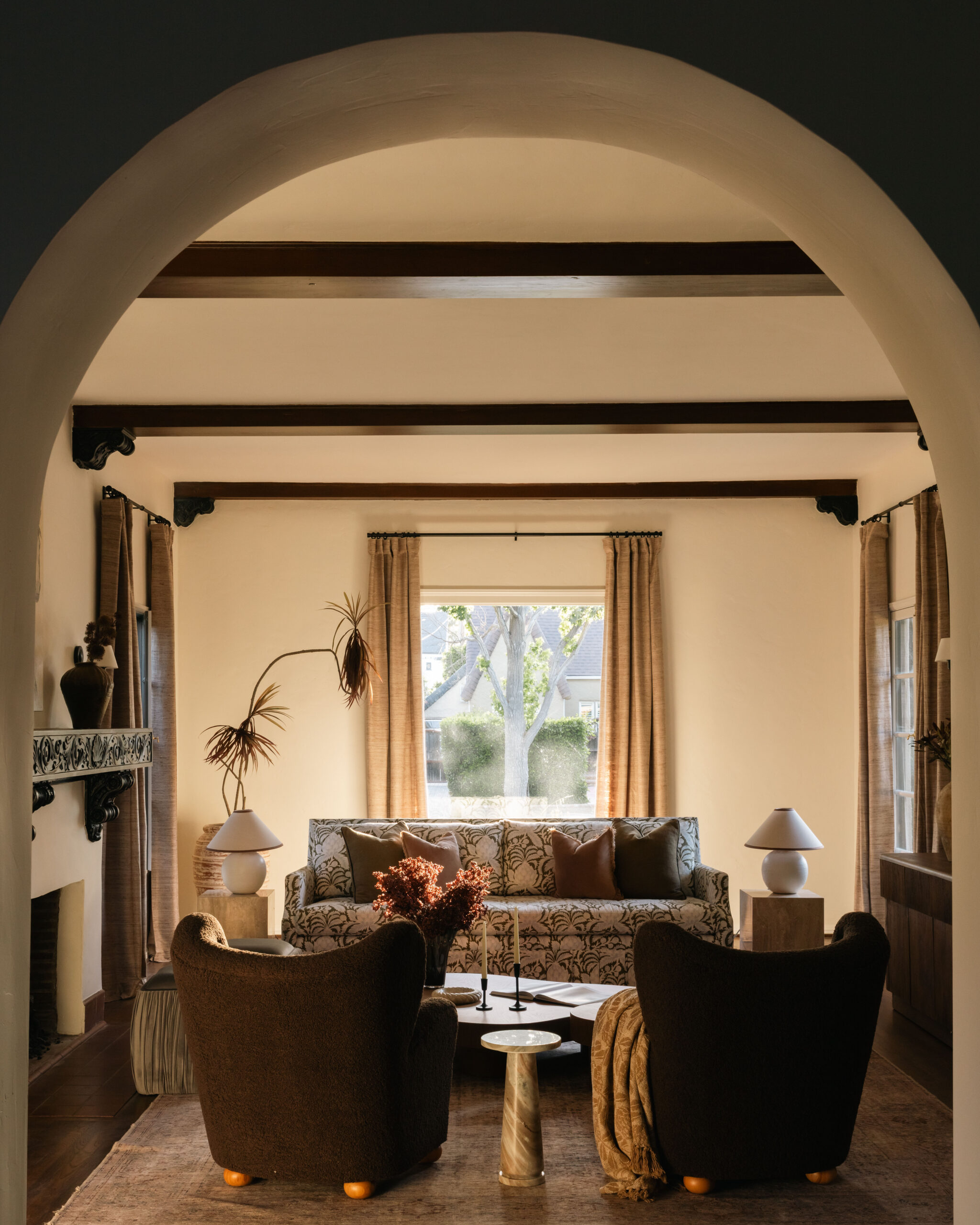
The signature building of Miracle Mile is the 1920s Spanish duplex. These were built as gracious multifamily housing when the boulevard was booming: two large units stacked or side by side, each one laid out like a proper house, with formal dining rooms, breakfast nooks, arched doorways, hardwood floors and the kind of plaster detail that no one builds anymore. Alongside them you will find Art Deco fourplexes, storybook cottages and a solid stock of single family homes, most of it original and much of it lovingly kept.
For buyers, the duplexes are the quiet star. Living in one unit and renting the other remains one of the few realistic ways to own character architecture in a central location while someone else helps carry the mortgage. Investors have known this for decades, which is why well preserved buildings here rarely sit long.
Much of the residential district south of Wilshire falls within the Miracle Mile HPOZ, one of the larger Historic Preservation Overlay Zones in Los Angeles. In practice that means exterior changes go through a design review process intended to keep the streetscape intact. It is a constraint worth understanding before you buy, and for many owners it is also the point: the HPOZ is a large part of why these blocks still look the way they do, and qualifying historic properties may be candidates for Mills Act tax relief.
The Condo Side of the Mile
Miracle Mile is not only a house and duplex market. Along Wilshire and the streets feeding into it you will find a range of condominium buildings, most of them midrise, built from the 1960s through the 2000s. They tend to offer generous floor plans relative to their price, and the better buildings put you within a short walk of the museums and the subway. For a buyer who wants a central address without the monthly carry of the towers along the Wilshire Corridor further west, this pocket deserves a serious look. As always with condominiums, the building matters as much as the unit: reserves, pending work and the character of the HOA should be reviewed carefully, and that diligence is where good representation earns its keep.
Museum Row, the Subway and Everything Within Reach
The nearby amenities are not subtle. LACMA’s new David Geffen Galleries opened in spring 2026, putting the campus back at full strength after years of construction. The Academy Museum anchors the corner of Wilshire and Fairfax, the Petersen Automotive Museum sits across the street, and the La Brea Tar Pits remain one of the strangest and most wonderful front yards any neighborhood in America can claim.
Then there is the subway. The Metro D Line extension opened its first new section in May 2026, and two of its three new stations, Wilshire/La Brea and Wilshire/Fairfax, bookend the neighborhood. A resident of Miracle Mile can now ride to downtown in well under half an hour, with future sections pushing west toward Century City and Westwood. Los Angeles neighborhoods with genuine rail access to the job centers are still rare, and the ones that have it tend to be rewarded over time.
Daily life fills in the rest. The Original Farmers Market and The Grove are minutes north. La Brea Avenue supplies restaurants and design showrooms. Eighth Street and Pico carry the neighborhood businesses, and the flats make it one of the more walkable and bikeable districts in the central city.
The Neighborhoods Next Door
Context sets the price here. To the east, Hancock Park offers grand estate streets at a meaningfully higher cost of entry. To the north, Beverly Grove trades at a premium for its proximity to Melrose Place and Cedars. Just across San Vicente, Carthay Circle is a smaller historic enclave with a similar architectural pedigree. Keep driving west on Wilshire and you arrive in Beverly Hills, where the numbers change entirely.
Miracle Mile gives you the same vintage architecture, the same central position and arguably better transit than any of them, at the friendliest price of the group. Buyers who tour all five often come back to the Mile once they see what their budget actually buys on Dunsmuir versus what it buys four blocks in any direction.
Who the Mile Fits
Miracle Mile suits a particular kind of buyer: someone who values architecture and location over square footage bragging rights, who likes the idea of walking to a world class museum on a Sunday, and who sees a duplex not as a compromise but as a strategy. It rewards patience, because the best streets turn over slowly, and it rewards preparation, because when a great Spanish duplex does surface, the people who know the neighborhood move quickly.
If Miracle Mile is on your list, or you are weighing it against its neighbors, I am glad to walk the blocks with you and talk honestly about where the value sits. Reach out anytime through the site, and in the meantime the full set of area guides lives in the Los Angeles neighborhoods library.
