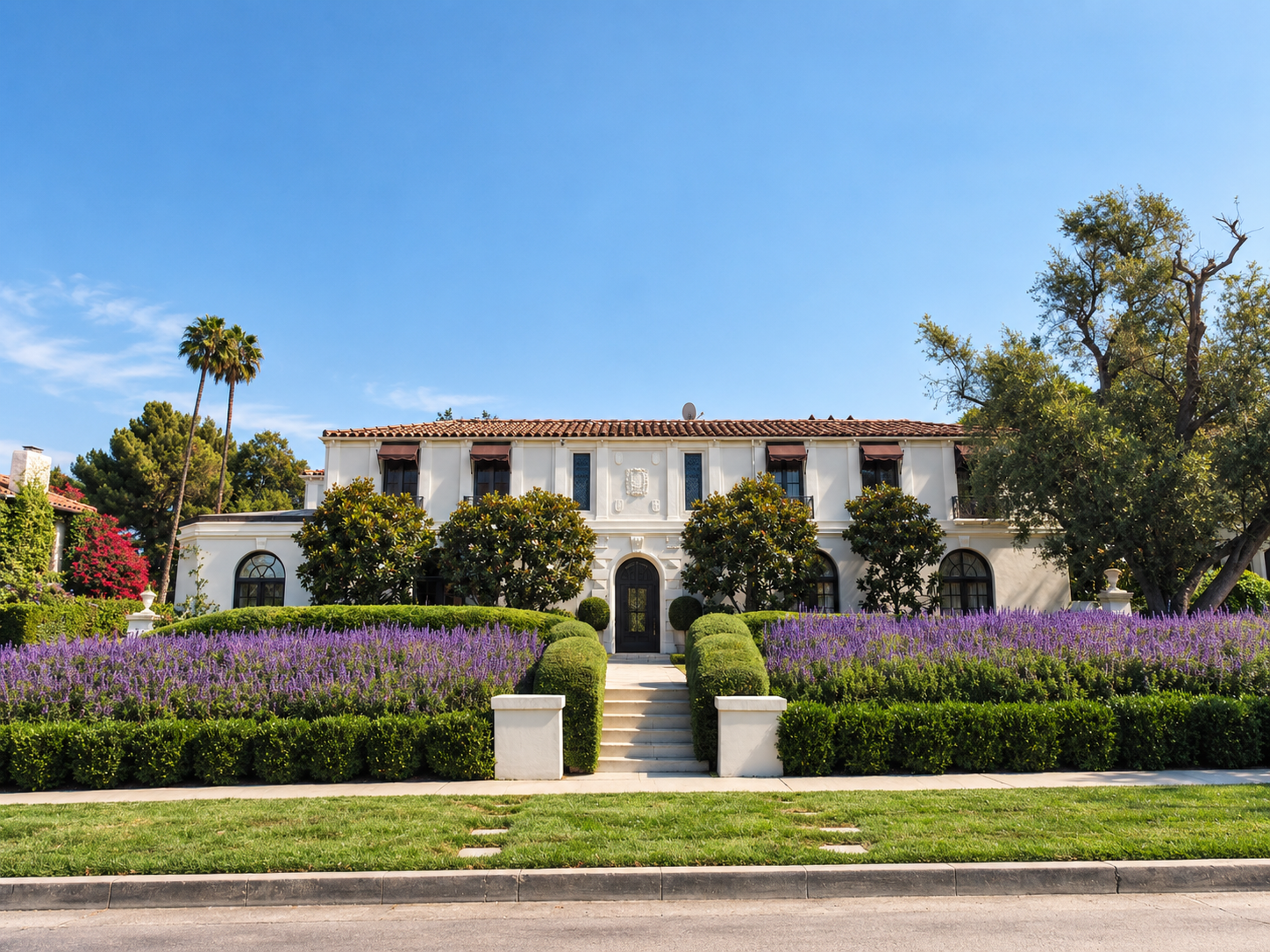
Every city has a neighborhood that explains it. For Los Angeles, that neighborhood might be Hancock Park. Laid out in the 1920s on land that once belonged to the Hancock family, it was built as a statement: wide streets, deep setbacks, mature trees, and houses designed by serious architects for people who intended to stay. A century later, remarkably little has changed. That is precisely the point, and precisely why buyers compete so hard to get in.
This guide covers what makes Hancock Park distinct, where its boundaries actually fall, how the historic protections work, and what to expect when you decide to buy here.
The Architecture Is the Whole Story
Hancock Park is one of the finest collections of period revival architecture in the country. The houses went up largely between the early 1920s and the Second World War, and they came in the great revival styles of that era: English Tudor, Spanish Colonial Revival, Mediterranean, American Colonial, French Normandy. Some of the most respected architects working in Los Angeles at the time, Paul Revere Williams among them, left their mark on these streets.
What strikes buyers on a first drive through is the coherence. These are substantial homes on substantial lots, but nothing shouts. Scale, materials, and landscaping all agree with one another, block after block. Walk down June Street, Muirfield Road, or Hudson Avenue and you will understand why film crews use the neighborhood as a stand in for the American everywhere: it looks the way people imagine a great residential street should look.
Inside, the houses deliver what newer construction rarely does. Formal entries, real dining rooms, generous ceiling heights, original millwork and hardware, staircases meant to be seen. Many have been thoughtfully updated over the decades; the best renovations open up kitchens and family rooms while leaving the formal rooms intact.
Where Hancock Park Begins and Ends
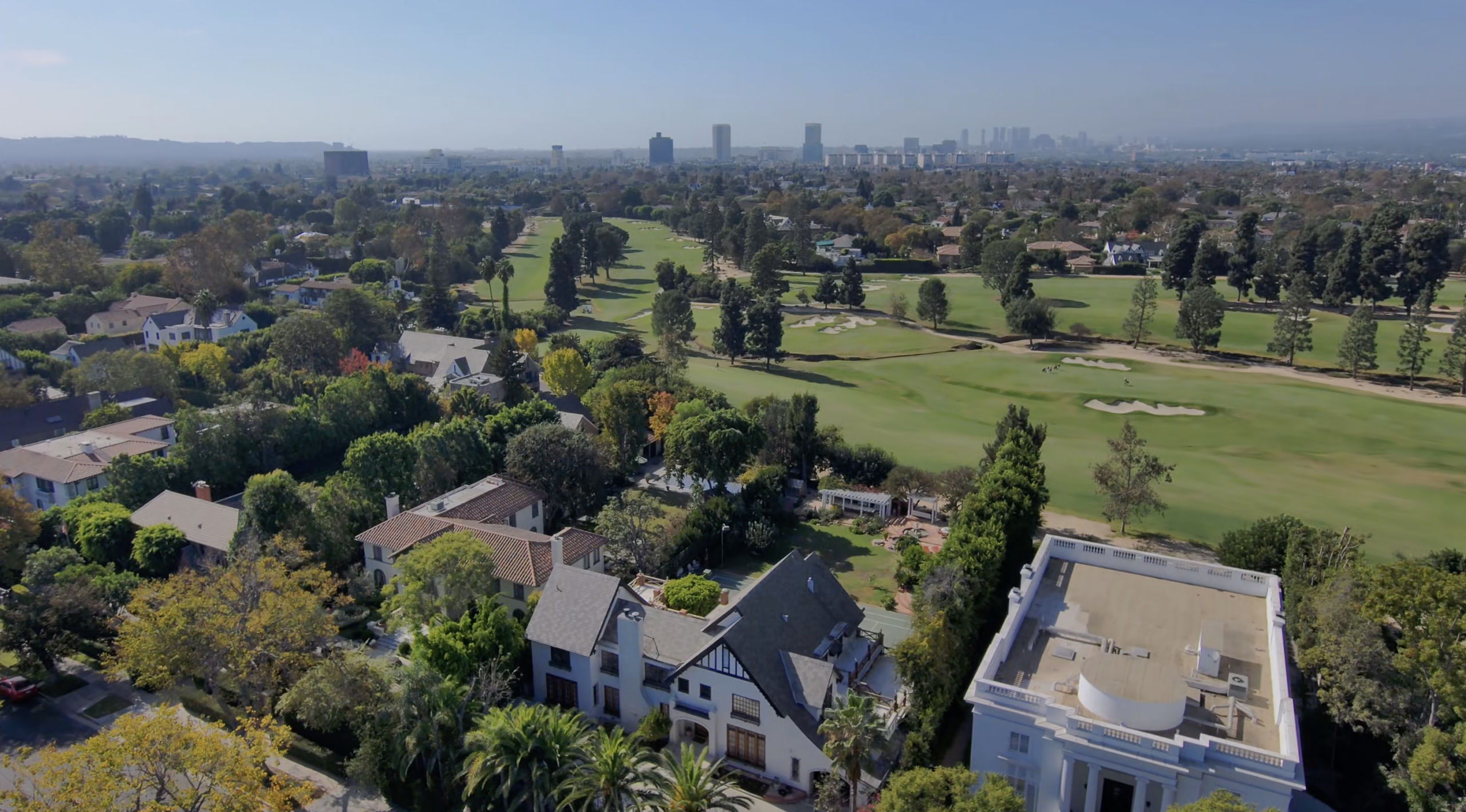
Purists define Hancock Park tightly: Melrose Avenue to the north, Wilshire Boulevard to the south, Highland Avenue to the west, and Rossmore Avenue to the east, with the Wilshire Country Club sitting at the neighborhood’s heart. The club’s golf course is the reason several streets end in quiet cul de sacs and the reason some of the most coveted homes back directly onto fairway green.
Cross Rossmore heading east and you are in Windsor Square, a sister neighborhood with its own history, its own historic protections, and the Getty House, the official residence of the mayor of Los Angeles. South of Wilshire sits Brookside, a smaller pocket threaded by one of the city’s few natural streams, and the gated enclave of Fremont Place. Agents and locals often use “Hancock Park” loosely to cover all of it. When you are evaluating comps, be precise. The tightly defined core and the surrounding pockets behave as related but distinct markets.
The HPOZ, in Brief
Hancock Park is a Historic Preservation Overlay Zone, the city of Los Angeles designation that protects the character of historic neighborhoods. In practical terms, exterior changes visible from the street go through a review process, and demolition of contributing homes is heavily restricted. Interiors are yours to renovate.
Buyers sometimes hear “HPOZ” and worry about red tape. The better way to think about it: the overlay is the reason the neighborhood still looks the way it does, and it protects the value of every house on the block. You will never wake up to find a glass box replacing the Tudor next door. If you are weighing a significant renovation, build the review timeline into your plans and work with an architect who knows the process. Owners of contributing historic homes may also want to ask about the Mills Act, a property tax program that can meaningfully reward preservation.
Daily Life Runs Through Larchmont
The neighborhood’s living room is Larchmont Boulevard, the low slung village street just east of the core. Larchmont Village still functions the way neighborhood main streets did a few generations ago: coffee in the morning, a bookstore, longtime restaurants, and a Sunday farmers market that draws the whole area out on foot.
The location is one of the most central in the city. Paramount Pictures is minutes away, which is why the neighborhood has housed studio executives and entertainers since the silent era. Midtown’s museums and offices along the Miracle Mile sit just west, Koreatown’s restaurants just east, and the studios of Hollywood directly north. For buyers who work on both sides of town, Hancock Park’s position between the Westside and Downtown is a genuine daily advantage. Families are also drawn by the schools, including Third Street Elementary and Marlborough, the girls’ school that has anchored the neighborhood’s eastern edge for more than a century.
What to Expect as a Buyer
Hancock Park is a low inventory market by nature. Families hold these houses for decades, and in any given season only a modest number of homes trade hands. When a well preserved house on a prime street does come up, it draws deep interest, and the strongest properties often sell quickly, sometimes before they are widely marketed. Quiet, off market activity is a real feature of this neighborhood, which makes representation with strong local relationships worth more here than in most markets.
Diligence matters more than usual, too. You are buying a house that may be a hundred years old, so sewer lines, foundations, electrical systems, and any unpermitted additions deserve careful inspection. None of this should scare you off; it simply rewards buyers who come prepared.
Price in Hancock Park tracks street, lot, architectural pedigree, and condition. A fairway adjacent estate on June or Muirfield occupies a different tier than a charming smaller home near the neighborhood’s edges, and both have their audience.
Is It the Right Neighborhood for You?
Buyers who love Hancock Park tend to be choosing character over novelty. If your taste runs to new construction with walls of glass, the hills or the Bird Streets will serve you better. If you want gracious rooms, real gardens, neighbors who know each other, and a streetscape that will look the same in thirty years, very little in Los Angeles compares. Shoppers in this part of the city should also walk Windsor Square and Brookside before deciding; each offers a slightly different answer to the same question.
I help buyers and sellers across the historic core and the rest of the Los Angeles luxury market, and Hancock Park remains one of the neighborhoods I know best. If you are considering a purchase here, or quietly weighing a sale, I am glad to share current intelligence on what is moving and what may become available.
