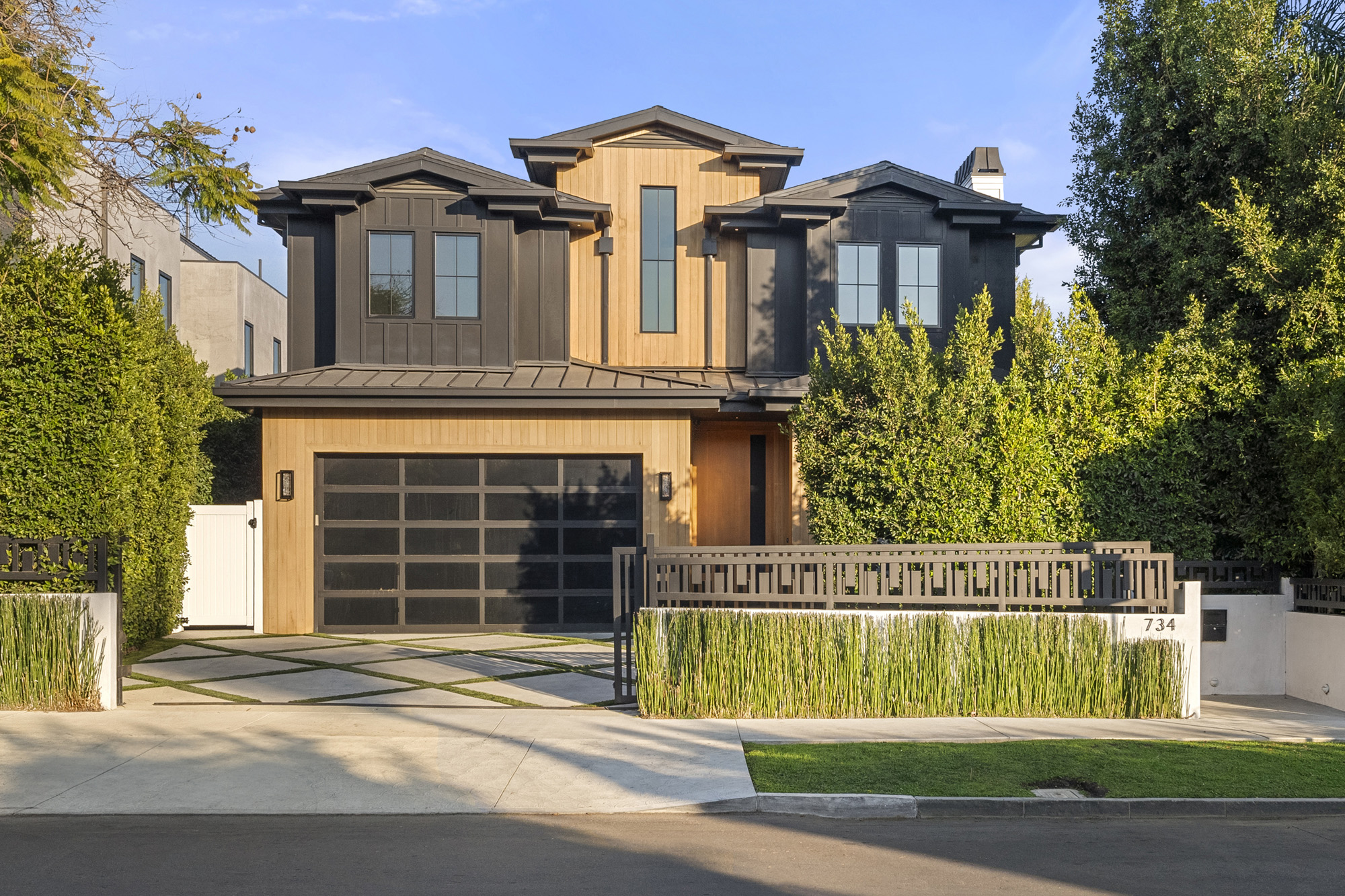
Three million dollars is the most revealing number in Los Angeles real estate. Below it, you are mostly negotiating over compromises. Well above it, the market becomes a private club with its own rules. Right at three, the whole city opens up, and every neighborhood answers the question differently. In one zip code it buys a landmark. In the next it buys a lot. Knowing which is which is the entire game.
So here is the honest tour, from the coast to the historic core, of what that budget actually gets you this fall.
The coast: space is the luxury
In Santa Monica, three million dollars has largely migrated from houses to condominiums. North of Montana it will not touch a single family home, but along Ocean Avenue and the blocks just behind it, the same money buys a genuinely large unit, often with an ocean view that houses twice the price cannot match. The best of these buildings trade on light and proximity to the beach rather than amenities, and the smart money shops the quieter streets between Montana and San Vicente, where the buildings are smaller and the walk to the bluffs is the same.
Malibu at this number requires discipline. The Colony and the Point Dume bluffs live in another bracket entirely. What three million buys is the landside life: a house in the hills above the Pacific Coast Highway with a white water view, or something east toward Topanga where the canyon meets the beach culture. Buyers who insist on sand at this price end up renting. Buyers who accept the view side often end up happier.
The historic core: character per dollar
This is where three million works hardest. Hancock Park and Windsor Square remain the best character home values in the city, block for block. The center of Hancock Park has drifted above this budget for the signature estates, but the surrounding streets, and neighboring Larchmont, still deliver real 1920s architecture, mature trees, and a neighborhood that functions like a small town with a commercial street of its own.
Head west into Beverly Grove and Miracle Mile and the math changes again. Three million here buys a fully done Spanish on a good street, often with a guest house, in walking distance of the Grove or the museum row on Wilshire. These neighborhoods have quietly become the connective tissue of the city for buyers who work on both sides of town, and the price per square foot still trails the Westside by a meaningful margin.
The hills: buying a view
In the Hollywood Hills, three million dollars is the sweet spot of the view market. It buys a midcentury post and beam in Nichols Canyon or above the Sunset Strip, a gated contemporary in Outpost Estates, or a compound deep in Laurel Canyon. The variable to watch is not square footage, it is the quality of the view and the sanity of the driveway. A jetliner view from a dead flat street is worth a premium over a bigger house with neither, and at this price point you can genuinely choose.
The Bird Streets themselves start well above this number, but the ridges around them do not, and plenty of three million dollar homes in the eastern hills look at the same basin the forty million dollar glass houses do.
South of the Boulevard: the most house in the city
If the question is pure house, the answer is the Valley. In Studio City, Sherman Oaks, and Encino, south of Ventura Boulevard, three million buys new or newly rebuilt construction: five bedrooms, a real yard, a pool, and the school districts that keep these streets in permanent demand. This is where the budget stops making compromises. The tradeoff is the commute over the hill, and for a growing share of buyers that tradeoff no longer exists.
The towers: lock and leave at full scale
The condominium market at three million is its own world, and a rich one. On the Wilshire Corridor, that budget commands respect: large two and three bedroom residences in established towers, with the newest buildings reserving their best floors for bigger numbers. In Century City, Century Towers has long been the classic entry to tower living, while the newer generation next door trades far higher. In West Hollywood, Sierra Towers sits at the top of the market, and three million gets you into the conversation there, with the city lights doing the rest. Westwood‘s buildings, and the boutique buildings scattered through West Hollywood and Beverly Hills, round out a set of options for buyers who want a full scale home without a single gardener’s invoice.
One more point in the towers’ favor, and the Valley’s, and the hills’: within the City of Los Angeles, a three million dollar purchase sits comfortably below the Measure ULA transfer tax line, which now begins at five million four hundred thousand dollars. Sellers at this price point do not carry that tax into the negotiation, which keeps deals cleaner than they are a few brackets up.
How to shop at three million
The common thread across all of these markets is that three million dollars buys excellence somewhere and adequacy somewhere else, and the gap between the two has never been wider. The buyers who win at this number decide what they are actually optimizing for, architecture, view, land, walkability, or zero maintenance, and then go to the neighborhood that sells that particular thing at a discount to its neighbors.
That is a research problem before it is a shopping problem, and it rewards advice from someone who works across the whole map rather than a single farm area. If you are weighing two or three of these neighborhoods against each other, Ben Kruger advises buyers across Los Angeles, from the beach cities to the historic core, and is glad to talk through where your three million works hardest.
