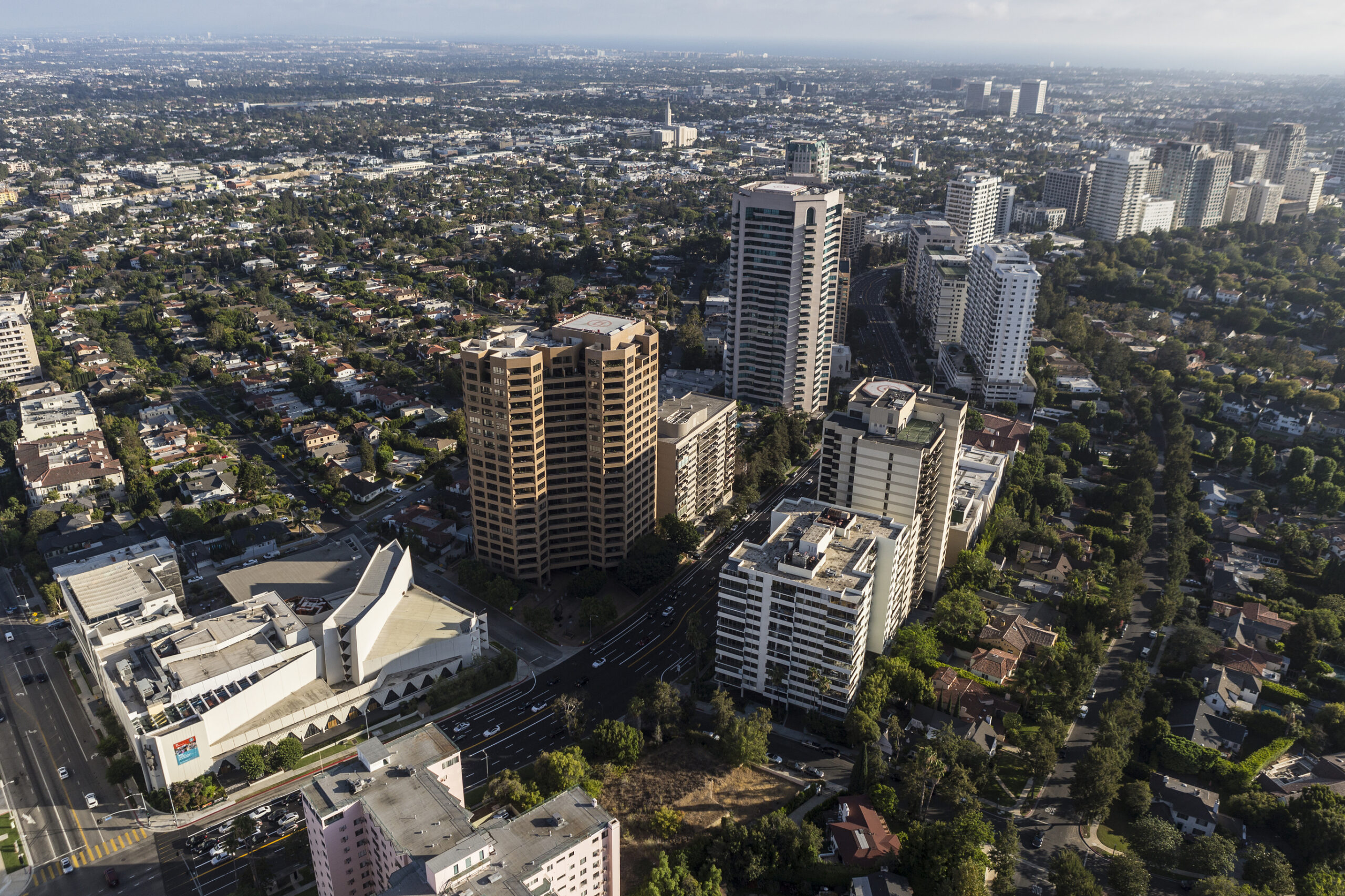
Between Westwood and Holmby Hills, Wilshire Boulevard does something it does nowhere else in Los Angeles. It goes vertical. For a short, remarkable stretch, a city famous for sprawl stacks its wealth in towers instead, roughly two dozen of them standing shoulder to shoulder along the boulevard. Locals have called it the Millionaire’s Mile for generations, and the nickname has aged well. This is the deepest, most liquid luxury condominium market in the city, and for a certain kind of buyer it is the best answer Los Angeles offers.
This guide covers how the Wilshire Corridor actually works: where it runs, how to read its buildings, and how to choose among them.
Where the corridor runs
The corridor occupies the stretch of Wilshire from the edge of Westwood Village east toward the greenery of Holmby Hills and the Los Angeles Country Club. That geography is the whole sales pitch. Stand on a high floor and the country club unrolls beneath you like a private park; to the north sit the estates of Holmby Hills and Bel Air, to the south the lights of the city running to the ocean. UCLA and its medical center are minutes away, which matters more to many owners than they expected it to. Beverly Hills is one direction on Wilshire, and the ocean is the other. The corridor is not really a neighborhood in the usual sense. It is a location, arguably the most central private address on the Westside, and the towers are simply the machinery for living on it.
Reading the buildings by era
The fastest way to understand the corridor is to read it the way an appraiser does, by generation.
The first generation arrived in the late 1950s and 1960s, when the boulevard’s zoning first invited height. Some of these buildings are cooperatives rather than condominiums, Wilshire Terrace most famously among them, and they carry a particular old world character: gracious floor plans, mature gardens, house rules with real teeth, and boards that interview buyers. Their neighbors from the same era, buildings like Wilshire Comstock and The Dorchester, tend to offer the most square footage per dollar on the boulevard, which makes them favorites of buyers who want space and are happy to renovate.
The middle generation, from the 1970s through the 1990s, produced the towers most people picture when they hear the corridor’s name: marble lobbies, valet at the porte cochere, and staff who know every resident by name. Wilshire House, The Wilshire, The Remington, La Tour, Blair House and their peers compete politely on service, and living in the best of them resembles residence in a fine hotel that happens to have no checkout.
Then there is the newest generation, led by The Carlyle, where the finishes, ceiling heights and amenity floors answer the modern towers of the Westside head on. Buildings like The Californian and the extensively reimagined Ten Five Sixty belong in this conversation too. These command the corridor’s premium prices, and their resale record explains why.
The point is that the corridor is not one market. A cooperative from 1960 and a glass tower from the 2000s may face each other across the boulevard and behave nothing alike in ownership, in monthly cost, or in what they demand of a buyer.
What life here is actually like
The corridor’s core customer has usually already owned the big house. A large share of these residences belong to people who sold an estate in Beverly Hills, Bel Air or Brentwood and kept the address quality while shedding the gardeners, the roof, and the alarm calls. The rest of the market is a mix of bicoastal and international owners who want a residence that locks and leaves beautifully, professionals tied to Century City or UCLA, and parents buying near campus with a long view.
What they are all buying is the same thing: staffed doors, valet parking, a gym or pool they do not maintain, and the security of neighbors above and below. What they are giving up is also worth naming. Outdoor space is mostly balconies, pets and renovations answer to house rules, and the boulevard itself is a working artery, so a quiet unit means choosing the right exposure. Serious buyers tour at rush hour on purpose.
The fine print
No part of this market punishes casual shopping like the paperwork. Monthly dues vary widely from building to building, and the number alone tells you little until you know what it buys and how the reserves look. Cooperative buildings involve board approval and often different financing than condominiums, a distinction I have written about in my guide to cooperative and condominium ownership. A few buildings carry structural quirks, from land arrangements to pending assessments, that shape value far more than the listing photos do. None of this should scare a buyer off. It should simply slow the process down by exactly one careful reading of the documents before an offer, not after.
The corridor against its rivals
Buyers weighing the corridor usually cross shop one of three alternatives. The towers of Century City are newer on average and resort like in their amenities, with a busier, more urban energy. Santa Monica‘s buildings trade the country club view for the ocean. And West Hollywood offers Sierra Towers and its Sunset Strip neighbors for buyers who want their tower with nightlife attached. Each answer suits a different life. The corridor’s argument is centrality, calm and depth of choice: more buildings, more floor plans and more price points in one mile than anywhere else in the city, from entry residences in the older buildings to penthouses that trade among the most significant condominium sales in Los Angeles.
Choosing your building
In practice, choosing comes down to three questions. Which generation of building fits you, in ownership, cost and character? Which floor and exposure give you the view and the quiet you are paying for? And how does the building’s paperwork read, because on the corridor the building matters as much as the unit. That last part is where representation earns its keep. I know these buildings door by door, and I keep track of which ones are trading well, which are quietly improving, and where the honest value sits this season. If a tower on the corridor is calling to you, I am glad to help you find the right one.
