
Home / Neighborhoods / West Hollywood
West Hollywood Homes for Sale
Design district calm, Sunset Strip energy, and the best small city services in Los Angeles, all in under two square miles.
Home / Neighborhoods / West Hollywood
Design district calm, Sunset Strip energy, and the best small city services in Los Angeles, all in under two square miles.
About the Neighborhood
West Hollywood began as Sherman, the 1890s company town where Moses Sherman's Los Angeles Pacific Railroad kept its shops, yards and worker cottages. The community took the West Hollywood name in 1925 but repeatedly declined annexation to Los Angeles, remaining unincorporated Los Angeles County territory for six more decades, the jurisdictional quirk that let the Sunset Strip's club economy flourish under county rules. On November 29, 1984, a coalition of renters, seniors and LGBTQ activists voted the 1.9-square-mile city into existence, and its first council promptly adopted one of the strongest rent stabilization ordinances in the country.
The housing stock is dominated by multifamily buildings, and a large majority of households rent. The blocks hold 1920s Spanish Colonial courtyard apartments, prewar fourplexes, postwar dingbats, midcentury towers and a steady run of newer condominium and mixed-use buildings, with the Pacific Design Center (1975) anchoring the Design District. Single-family pockets survive in West Hollywood West, near Melrose Place, and in the Norma Triangle below the Strip. The city maintains its own inventory of designated cultural resources, including courtyard housing from the Sherman era, so age here often comes with documented character and, sometimes, review obligations.
West Hollywood writes its own rules, which surprises buyers accustomed to Los Angeles procedures. The city's zoning code, not LA's, governs development; rent stabilization has applied to most older apartments since 1985; an Affordable Housing Trust Fund dating to 1986 collects developer fees; the Sunset Specific Plan controls the Strip's billboards and hotels; and residential rentals under thirty-one days are prohibited. Because the city is essentially flat, Los Angeles's Baseline Hillside Ordinance and hillside fire-zone rules stop at the boundary; the relevant seismic issue instead is the soft-story retrofit generation of older wood-frame apartment buildings.
The texture is the most walkable in the region: Santa Monica Boulevard's restaurant and nightlife spine, the Design District's showrooms, Melrose Avenue shopping, and groceries, gyms and pharmacies within blocks of most front doors. The city runs unusually rich services for its size, from free shuttle lines to social programs, and code enforcement, street trees and trash pickup are handled by a government responsible for less than two square miles. Trade-offs are metropolitan: paid and permit parking, weekend crowds near the Strip and Boystown, and construction cycles as older buildings turn over into new mixed-use projects.
Buyers should match diligence to building type. For condominiums, read HOA budgets, reserves, litigation and retrofit status; for duplexes and small apartment buildings, confirm which tenancies are rent-stabilized, at what rents, and what the ordinance permits on increases and occupancy. Check whether a property appears on the city's cultural resources survey, which can affect alterations. Verify the parcel is actually within West Hollywood, since Los Angeles surrounds the city on three sides and boundaries cut mid-block in places. And correct the most common assumption directly: West Hollywood is served by LAUSD, not Beverly Hills Unified, whatever the westside address suggests.
Life Here
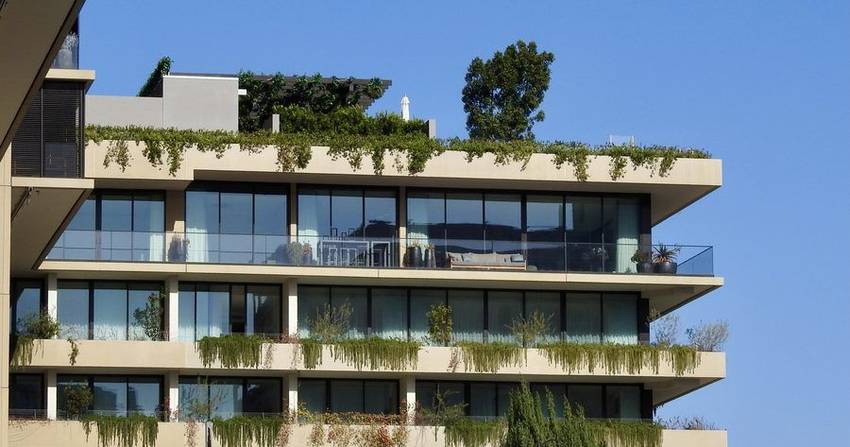
From Sierra Towers to boutique midcentury gems, West Hollywood has the best condo stock in the city. Every notable building is in the directory.
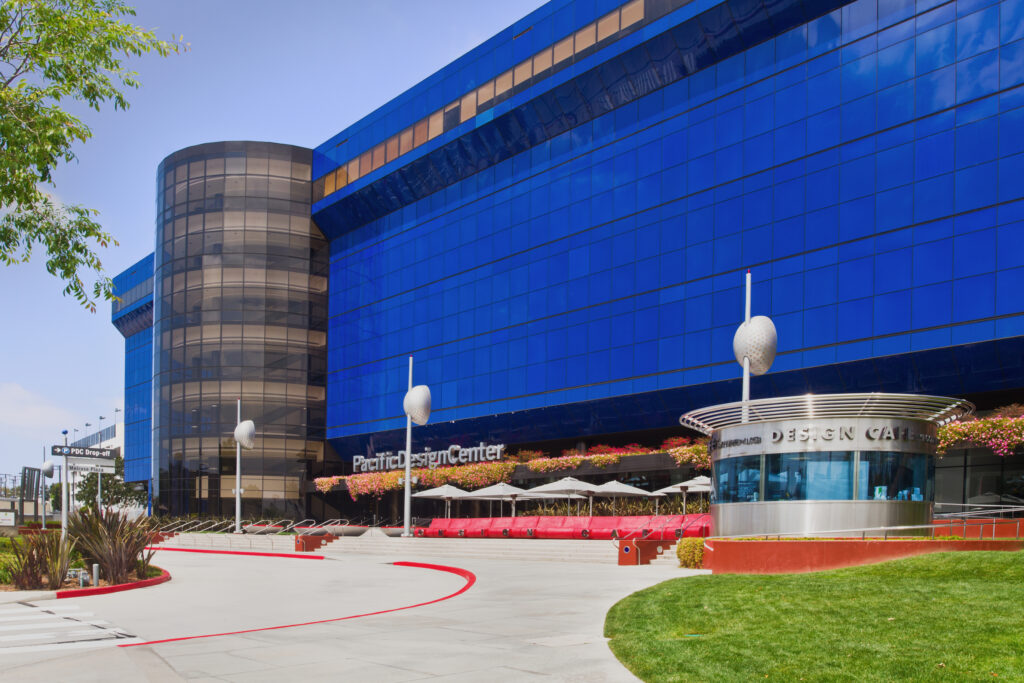
Restoration Hardware, galleries and the Pacific Design Center anchor the calmest, greenest corner of the city.
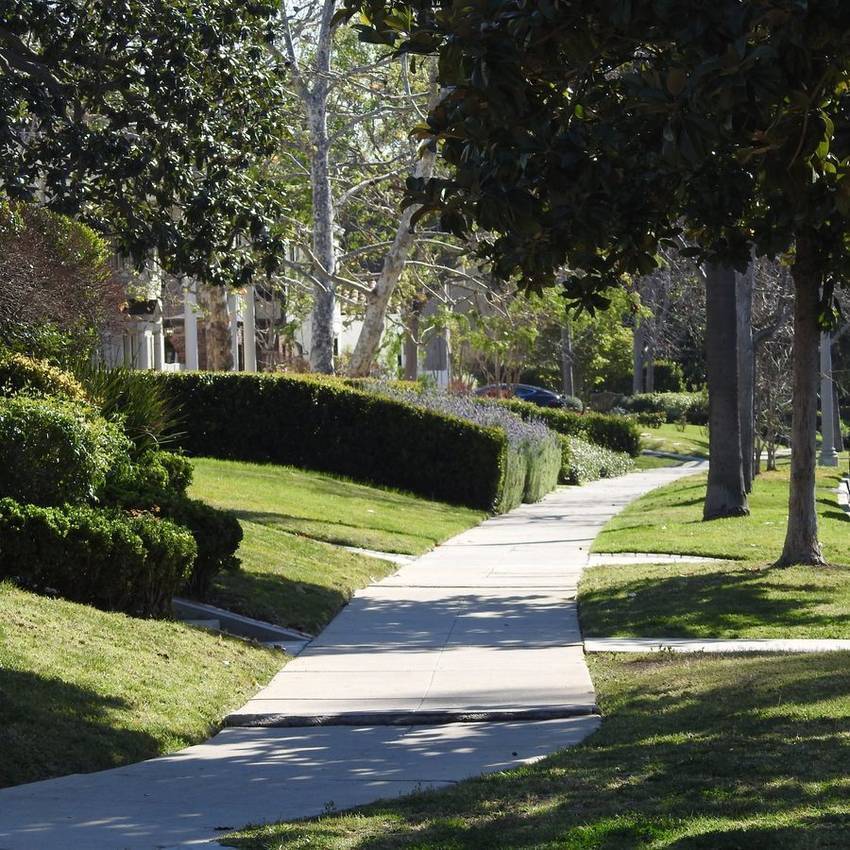
Its own city hall, its own sheriff contract, and streets that actually get swept. Small city living inside the big one.
History
West Hollywood stayed a county island for reasons that were practical before they were political. As Sherman's rail yards gave way to apartments and storefronts in the 1920s, residents repeatedly voted against joining Los Angeles, and the calculus was straightforward: unincorporated territory answered to the county Board of Supervisors and the Sheriff's Department rather than to City Hall and the LAPD, with looser licensing and lighter enforcement as the practical result. The Sunset Strip's club economy was built on that arrangement, and by the postwar decades the same relative tolerance made the area a refuge for gay bars and their patrons at a time when police harassment was routine inside Los Angeles proper. The county island was, in effect, a different set of rules.
Cityhood arrived in 1984 through what the city itself describes as an unlikely alliance of renters, seniors and LGBTQ activists, organized in large part by the Coalition for Economic Survival amid fears that county rent protections would lapse. On November 29, 1984, voters approved incorporation, and the new city seated what the city's own history records as the first governing body in the nation with an openly gay majority. The founding agenda was explicit: the council adopted a rent stabilization ordinance in 1985 that remains among the country's strongest, and in its first year passed ordinances prohibiting discrimination based on HIV/AIDS status and sexual orientation and created a domestic partnership registry. West Hollywood was founded, quite literally, as a tenants' city and a civil-rights city.
The Pacific Design Center gave the future city its landmark a decade before incorporation. The cobalt-glass Blue Building, designed by Cesar Pelli for Gruen Associates and opened in 1975, was so out of scale with the storefronts around it that locals called it the Blue Whale; Pelli's Green Building followed in 1988, and the Red Building completed the composition in 2013. Around it, the Melrose Avenue showroom trade matured into today's West Hollywood Design District, a walkable concentration of design, fashion and gallery retail. The city has kept investing in that identity, and four decades after incorporation the 1.9-square-mile city pairs one of the region's densest residential fabrics with a civic brand built on design, nightlife and progressive government.
Architecture
West Hollywood holds one of the country's finest concentrations of 1920s courtyard housing, the Southern California type that wraps apartments around a shared garden court. The masters of the form, Arthur and Nina Zwebell, built Villa Primavera on North Harper Avenue in 1923, Patio del Moro on Fountain Avenue in 1926 and the Andalusia on Havenhurst Drive the same year; Walter and Pierpont Davis answered with the Villa d'Este on Laurel Avenue in 1928. The city's historic preservation program designates many of these as cultural resources, citing their fireplaces, fountains and shared courts as defining features. For buyers, the type survives mostly as protected rental stock and, occasionally, as small condominium buildings with documented provenance.
The most important building in West Hollywood is a house that looks, at first, like a garden wall. R.M. Schindler's own house and studio at 835 North Kings Road, built in 1922, replaced conventional rooms with a pinwheel of tilt-slab concrete and redwood pavilions opening onto shared patios, designed as a communal live-work experiment for the Schindlers and Clyde and Marian Chace. Architectural historians treat it as a founding work of Southern California modernism, the laboratory where Schindler, joined for several years by Richard Neutra, worked out ideas that spread worldwide. Preserved by the Friends of the Schindler House since 1980 and operated as the MAK Center for Art and Architecture since 1994, it remains open to the public on an otherwise ordinary street.
The condominium era arrived in waves. The 1960s and 1970s lined the Doheny corridor and the blocks off Santa Monica Boulevard with mid-rise and high-rise buildings, Sierra Towers among them at the city's western edge, that still form the core of West Hollywood condos inventory. The 2010s and 2020s brought a design-led generation: 8899 Beverly, Richard Dorman's 1964 office building reimagined by Olson Kundig into forty residences and honored by AIA Los Angeles for adaptive reuse; The Harland at 702 North Doheny Drive, thirty-seven residences by OfficeUntitled with Marmol Radziner interiors, returned to condominium sales in 2025; and the Sun Rose Residences, the former Pendry, above the Sunset Strip. Several of these buildings are profiled individually in the building directory.
Understanding the Market
West Hollywood's ownership market is condominium-first. Most of the city's housing is multifamily and a large majority of households rent, so the for-sale inventory concentrates in condo buildings spanning sixty years of construction, with single-family houses limited to a few pockets and priced accordingly. For buyers, that composition is an advantage: West Hollywood condos offer entry points across a wide band, from 1970s corridor buildings to full-service towers to the new design-led generation, all within a walkable 1.9 square miles. It also means diligence is mostly HOA diligence, budgets, reserves, seismic retrofit status in older buildings, and rules on leasing, because association quality varies far more than location does within a city this small.
Investors should understand rent stabilization before writing offers on duplexes or small apartment buildings. Under the city's ordinance, most multifamily buildings with certificates of occupancy issued before July 1, 1979 are covered, per the city's Rent Stabilization Division, while newer construction and condominiums first rented after the mid-1990s are generally exempt from rent caps though still subject to eviction protections. State law allows rents to reset when a unit turns over voluntarily, but sitting tenancies transfer with the building. None of this makes income property unworkable, West Hollywood's rental demand is deep and durable, but it makes the rent roll, not the price per square foot, the document to underwrite. Verify each unit's status directly with the city.
Living in West Hollywood reads differently district by district, and so does buying. The Norma Triangle and West Hollywood West hold the city's principal single-family stock, small lots that trade at estate-neighborhood prices per foot because there are so few of them. The Sunset Strip's western blocks carry the tower and branded-residence market. The Design District's edges have gained boutique condominium buildings, while the Eastside along Fountain Avenue offers the deepest value in older condos and duplexes. West Hollywood homes for sale therefore span a wider spectrum than the city's footprint suggests, and the right district is usually a lifestyle decision first, walk-to-restaurants energy against quiet residential streets, before it becomes a financial one.
Micro Neighborhoods
The city's northern corridor is its most famous asset: the Sunset Strip, inherited whole at incorporation and governed since 1996 by the Sunset Specific Plan. For buyers, it is the tower district, Sierra Towers, Shoreham Towers and Empire West from the 1960s, joined since 2019 by the EDITION residences and the Sun Rose, formerly the Pendry. Condos on the Sunset Strip trade on skyline views and full service rather than square footage per dollar, and the corridor's nightlife rhythm is part of the deal. A dedicated Sunset Strip page covers the towers, the hillside edge and the market in depth.
View The Sunset StripSunset Plaza is the composed center of the Strip: the Montgomery family's 1930s Georgian and Regency-styled retail rows, sidewalk cafes, and the residential hillside rising directly behind along Sunset Plaza Drive. Within West Hollywood proper, the surrounding blocks hold apartments and small condominium buildings that trade on the address; above the boulevard, the hillside houses sit across the line in Los Angeles. It is the part of the corridor where daytime life is as strong as nightlife, and it anchors the west-central Strip's walkability. The name has carried pricing power of its own for decades.
View Sunset PlazaThe Norma Triangle is the wedge of small streets between Doheny Drive, Santa Monica Boulevard and the Sunset Strip, and it holds the city's best-known pocket of single-family houses: 1920s bungalows and Spanish cottages, many comprehensively rebuilt, on compact lots a short walk from both the Strip and Beverly Hills. Scarcity does the pricing here, since the city has only a few single-family districts and this is the most walkable of them. For buyers priced between a condo and a hillside estate, the Triangle is often the answer: a house, a yard and a two-minute drive to everything.
View Norma TriangleDoheny Estates rises just above the city's northwest corner, on the Los Angeles side of the boundary where the hills climb from Sunset toward Trousdale Estates. Its midcentury pads and rebuilt contemporary view houses make it the house-market counterpart to the Strip's towers: many owners here treat West Hollywood as their functional neighborhood, using its restaurants and services daily while holding title under Los Angeles hillside rules. For search purposes it belongs on any serious West Hollywood-area shortlist, which is why it is covered alongside the city's own districts despite the jurisdictional line.
View Doheny EstatesWest Hollywood West occupies the city's southwest corner, the flat blocks between Beverly Boulevard and Melrose Avenue near Doheny Drive, and it is the city's largest single-family quarter: modest 1920s-1940s houses, Spanish and traditional, steadily rebuilt into contemporary small-lot homes. An active residents' association gives the neighborhood a defined voice at City Hall. The Olson Kundig-designed 8899 Beverly rises at its edge, and Cedars-Sinai and the Beverly Center sit just across the city line. For buyers wanting a house with Design District walkability, this is the district to watch, and inventory runs chronically thin.
The West Hollywood Design District gathers Melrose Avenue, Melrose Place and the streets around the Pacific Design Center into the city's design and fashion quarter, with Cesar Pelli's blue, green and red glass landmarks at its center. Residentially it is a mixed fabric: courtyard apartments and small condo buildings on the side streets, newer boutique condominium projects at the edges, and single-family pockets toward West Hollywood West. Ownership here buys proximity to the city's best retail and restaurant fabric rather than views, and the district's showroom economy keeps its daytime streets as active as its evenings.
East of Fairfax Avenue, West Hollywood changes register: denser, flatter and more workaday, with Fountain Avenue's prewar courtyard buildings and streamline-era apartments running past Plummer Park toward La Brea. This is the city's traditional value quarter and its deepest rental fabric, much of it covered by rent stabilization, with older condominiums and duplexes offering the lowest entry points to living in West Hollywood. New mixed-use projects along Santa Monica Boulevard are adding contemporary stock. For investors, the Eastside is where rent-roll mathematics matter most; for owner-occupants, it trades polish for value and genuine neighborhood texture.
Condominiums
Education
All of West Hollywood is in LAUSD and assignments follow the parcel, with some blocks jointly zoned, so confirm any address through the district's Resident School Identifier.
Common Questions
Keep Exploring
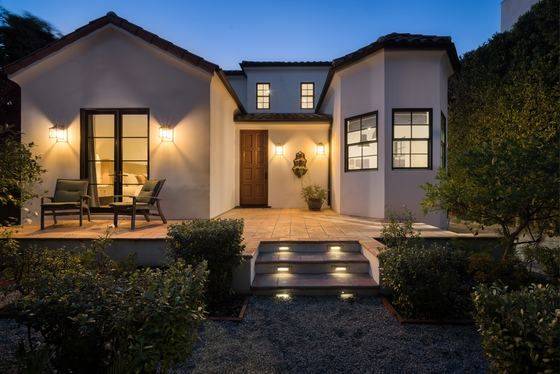
Also in this part of the city: The Sunset Strip
Work With Ben
Between the buildings and the hidden streets, WeHo rewards inside knowledge. Tell Ben what you are looking for, for sale or lease, including off market.
Start the ConversationBen will reach out shortly to set up your tour.


