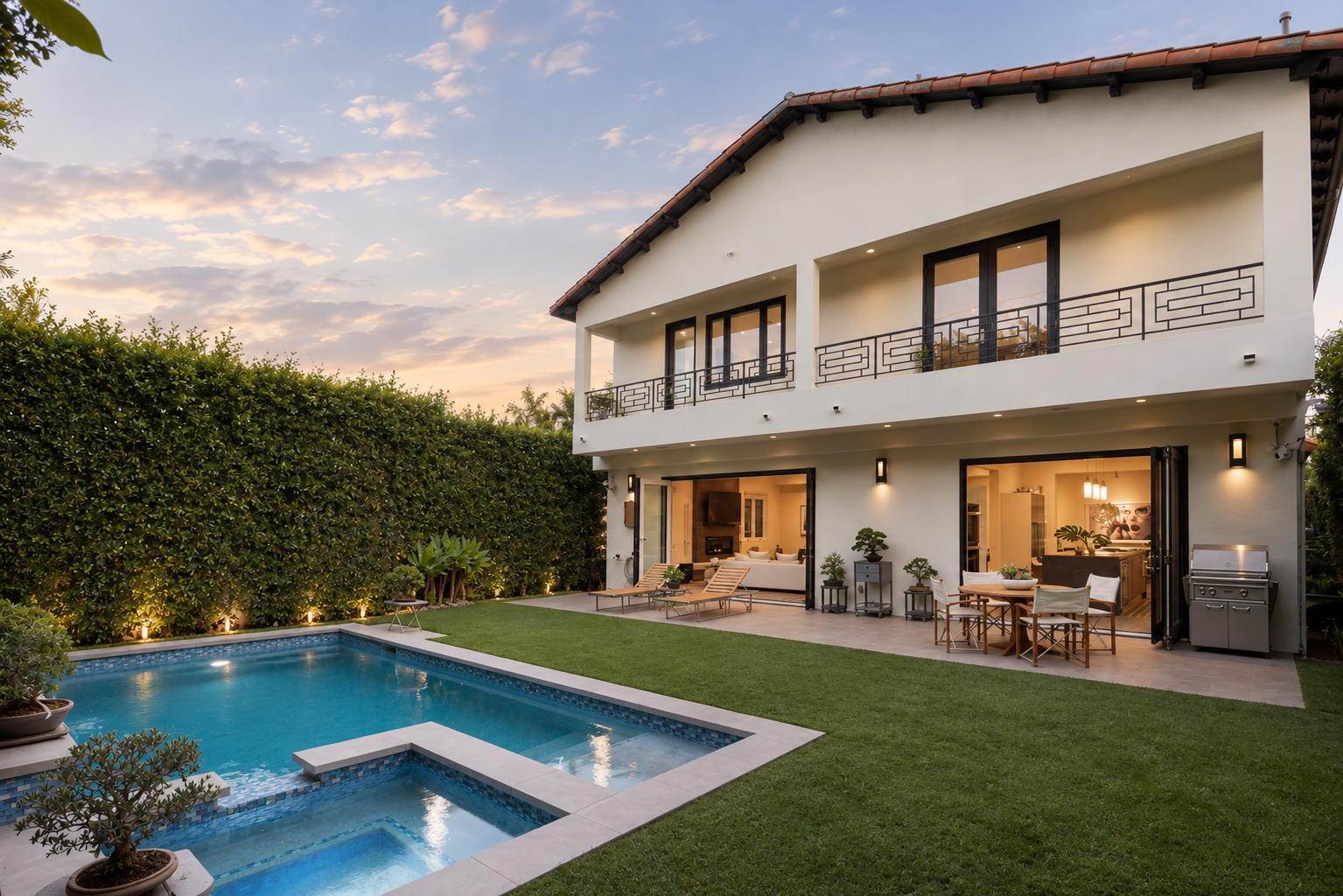
Ask ten Angelenos where Beverly Grove begins and ends and you will get ten different maps. Some call it Beverly Center adjacent. Some lump it in with Fairfax. The people who actually live there know better. Beverly Grove is the pocket of leafy residential blocks strung between two of the city’s busiest retail anchors, and it offers something that is surprisingly hard to find in Los Angeles: a 1920s character house on a quiet street, with real restaurants and real errands a short walk away.
Where It Sits
Beverly Grove runs roughly from Melrose Avenue down toward Wilshire, and from La Cienega and San Vicente east to Fairfax. The Beverly Center marks its western edge. The Grove and the Original Farmers Market sit just past its eastern one, at Third and Fairfax. In between, the big corridors of Beverly Boulevard and Third Street carry the neighborhood’s commercial life, while the numbered and named streets between them stay residential and calm.
Centrality is the neighborhood’s quiet superpower. From these blocks, traffic willing, twenty minutes puts you at a wine bar in Silver Lake or on the Westside, and the studios, Downtown, and the beach all sit inside roughly the same radius. For buyers whose lives pull them across town in different directions every day, few addresses in Los Angeles split the difference this well.
The neighbors matter here, because buyers shopping Beverly Grove are almost always shopping the surrounding areas too. West Hollywood begins immediately to the north across Melrose, with a different city government, different rent rules, and a denser condo market. Miracle Mile picks up to the south near the museums. South Carthay, one of the city’s protected historic districts, sits just southwest. Beverly Hills is a five minute drive west, and the estate blocks of Hancock Park are a short hop east past Fairfax.
The Houses
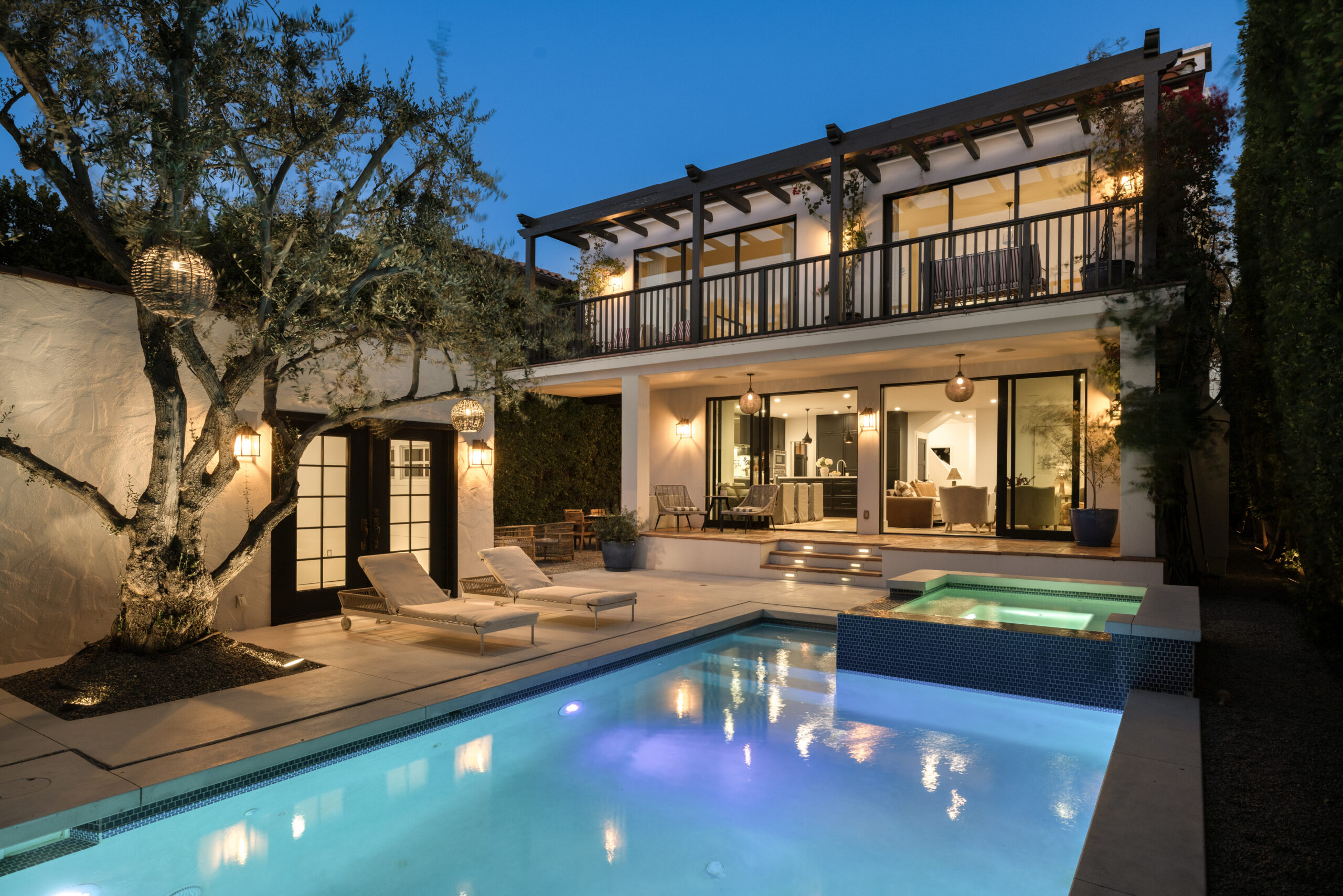
The housing stock is the reason people fall for this neighborhood. The core blocks were built out in the 1920s and 1930s, and the original fabric is still largely intact: Spanish Colonial Revival bungalows with arched doorways and tile roofs, storybook Tudors, and clean Traditional houses on lots that are modest by Hancock Park standards but generous for how central the location is. Many have been thoughtfully expanded. Some have been taken down to the studs and reimagined. A few still wait for the buyer willing to do that work, and those are often the best opportunities on the Westside’s eastern flank.
Duplexes are the neighborhood’s quiet signature. Whole stretches of Beverly Grove were built as side by side or stacked Spanish duplexes, and they remain one of the smartest ways to buy here: live in one unit, let the other help carry the mortgage, and own a piece of architecture that no one builds anymore. Newer small lot homes have also appeared on some blocks, three story contemporary houses that trade yard space for rooftop decks. Whether that mix reads as energy or as erosion depends on the buyer, which is exactly why walking the specific street before writing an offer matters so much here.
The Condo Side
Condominiums in Beverly Grove cluster along the corridors: Beverly, Third, La Cienega, and the streets feeding Burton Way. Most buildings are boutique, built from the 1960s through the 2000s, with a few dozen units, controlled entry, and dues that stay reasonable because there is no tower infrastructure to maintain. For buyers who want that scale, this is one of the better values in the area, since similar units a few blocks north inside West Hollywood often price higher on name alone.
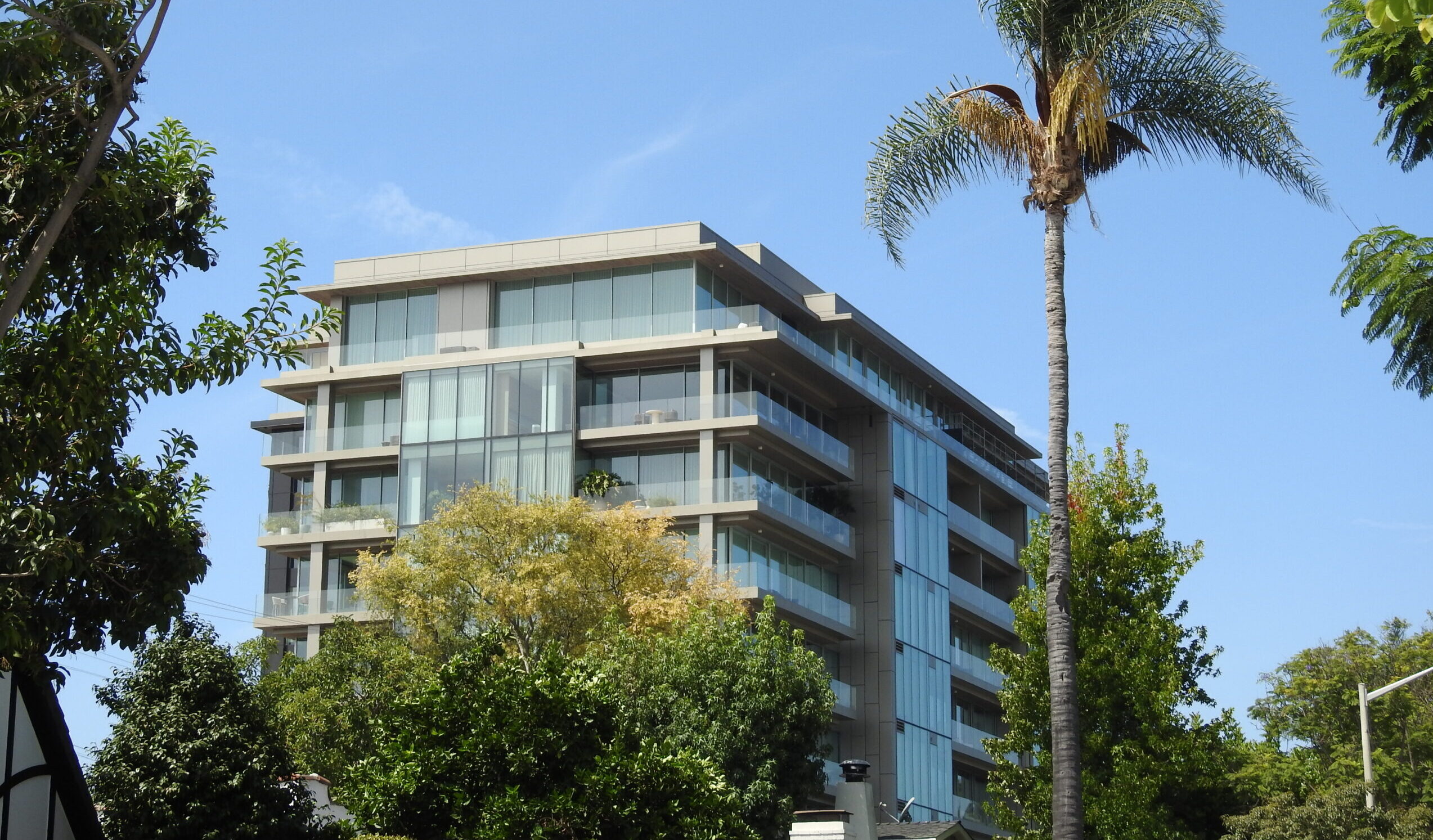
At the top of the market, two addresses near the neighborhood’s western seam deserve attention. 8899 Beverly, the glass landmark just across the line in West Hollywood, reset expectations for new construction in the area. And the Four Seasons Private Residences on Burton Way brought branded, hotel serviced living to the neighborhood’s doorstep. Both draw buyers who might otherwise look only at Beverly Hills or the Wilshire Corridor.
Daily Life
This is the part Beverly Grove gets right in a way few LA neighborhoods do. Third Street carries a long run of cafes, boutiques, and restaurants, and most of the neighborhood can reach it on foot; the morning coffee on Third without ever touching the car is the small daily luxury that sells people on living here. Beverly Boulevard has become one of the city’s most interesting dining streets, anchored by institutions like Angelini Osteria. The Grove and the Farmers Market handle the weekend wander, the Beverly Center handles the department store run, and Melrose Place is ten minutes on foot for anyone who takes their shopping seriously. Pan Pacific Park adds green space and a farmers market of the everyday sort. The Cedars Sinai medical campus sits at the neighborhood’s western edge and employs more than 16,000 people, which makes these blocks a perennial favorite of its doctors, nurses, and staff. For a physician coming off a long shift, a commute measured in minutes rather than freeway exits is not a perk. It is the whole reason to be here.
What Buyers Should Weigh
A few honest notes. The corridors are busy, and houses on or near Beverly, Third, or La Cienega trade at a discount to the interior blocks for good reason; listen for traffic at rush hour, not on a quiet Sunday showing. Permit parking governs most residential streets, which keeps them calm but requires planning for guests. Unlike South Carthay or parts of Miracle Mile, most of Beverly Grove carries no historic district protection, so the streetscape can change block by block as small lot projects replace older homes. And on the condo side, the usual diligence applies: read the budget, the reserves, and the minutes before falling in love with the view.
None of this is disqualifying. It is simply the texture of a neighborhood in demand, and it is why pricing here rewards buyers who know the blocks rather than the averages.
The Bottom Line
Beverly Grove suits buyers who want character architecture without a long drive to everything, who value walkability over lot size, and who like living at the center of the map. It competes with West Hollywood on convenience, undercuts Beverly Hills on price, and offers a housing stock that Miracle Mile and the Carthay districts echo at slightly gentler numbers. For many buyers it ends up being the compromise that does not feel like one. Ben Kruger of Carolwood Estates represents buyers and sellers throughout Beverly Grove and the surrounding neighborhoods, and is always glad to walk the blocks with anyone deciding among them.
