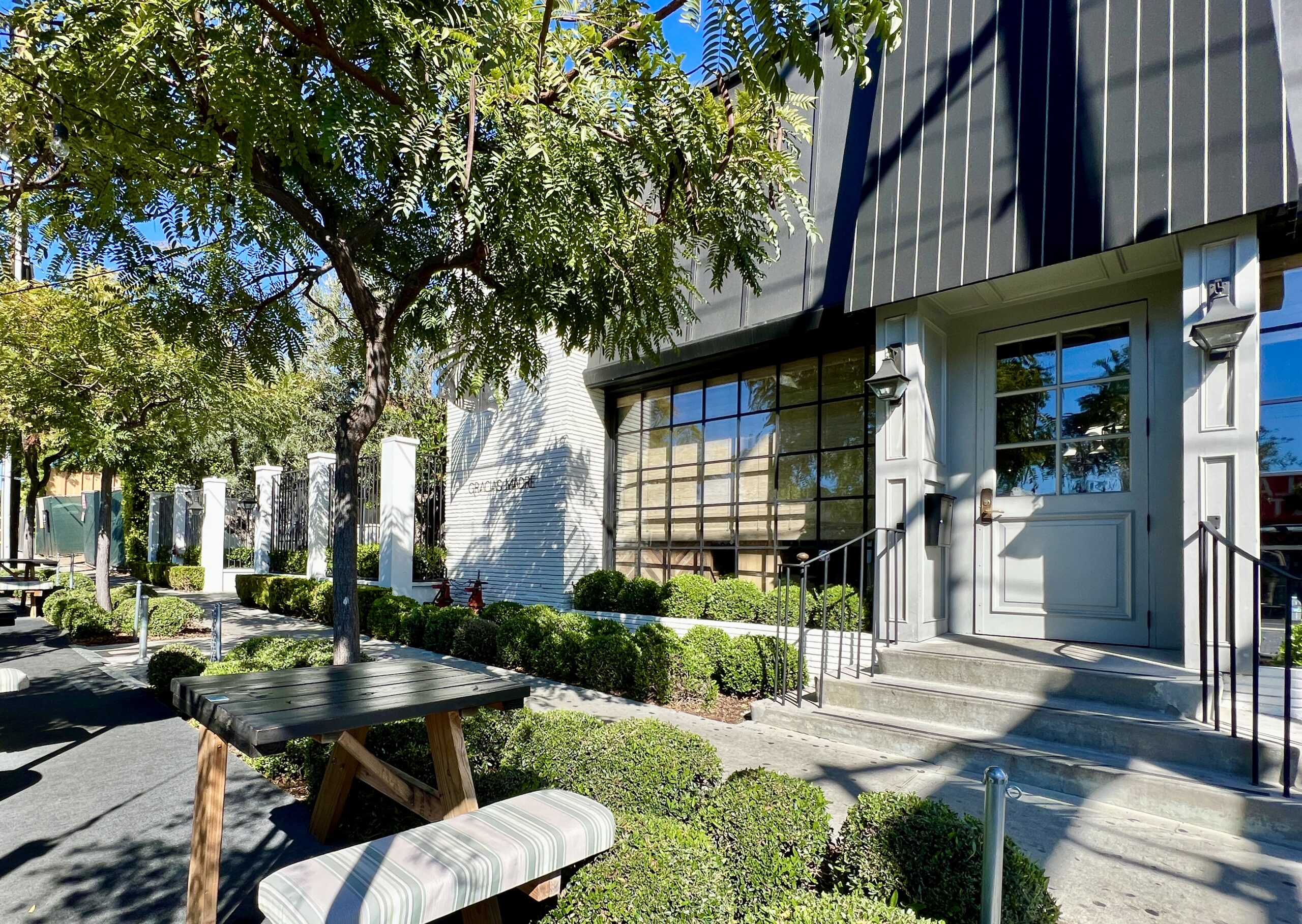
Ask three locals where Beverly Grove ends and West Hollywood begins and you will get three different answers, usually delivered with total confidence. The confusion is understandable. The two share restaurants, dog parks, dry cleaners and a general sensibility. You can walk from one to the other without noticing anything change. But for a buyer, the line matters more than almost any other neighborhood boundary in Los Angeles, because it is not just a name on a map. It is a city limit.
Where the line actually runs
West Hollywood is its own incorporated city, founded in 1984, with its own city hall, city council, building department and ordinances. Beverly Grove is a neighborhood of the City of Los Angeles. Everything else about the comparison flows from that one fact.
On the ground, the border is irregular, which is why people argue about it. West Hollywood runs from Doheny Drive on the west, where it meets Beverly Hills, to roughly La Brea on the east, where it meets Hollywood. Its southern edge follows Beverly Boulevard for a stretch west of La Cienega, then steps north toward Melrose and Waring as you move east. Beverly Grove picks up below that line: the blocks around Beverly Boulevard and Third Street, the Beverly Center, Cedars Sinai, and the quiet residential streets running south toward the Miracle Mile. The Pacific Design Center, for the record, is West Hollywood. The Beverly Center, a few hundred yards away, is Los Angeles. The Grove, despite the shared name, is in the Fairfax district next door.
A practical test: if your address is on Melrose Place, you are in West Hollywood. If you are on one of the Spanish duplex streets south of Beverly, such as Orlando, Sweetzer or Clark, you are almost certainly in Beverly Grove. When it is genuinely close, check the parcel, not the marketing remarks. Listings mislabel this boundary constantly, in both directions, depending on which name the agent thinks sells better that year.
Different cities, different rules
Because Beverly Grove sits inside the City of Los Angeles, sales there are subject to the city documentary transfer tax, and at higher price points to Measure ULA, the additional transfer tax Los Angeles voters approved on its most expensive sales. West Hollywood is outside the City of Los Angeles, so ULA simply does not apply there, no matter the price. For sellers of larger properties, and for buyers thinking about eventual resale, this single line on the map can change the economics of a transaction meaningfully. I covered the mechanics in a separate piece on Measure ULA.
The rulebooks diverge elsewhere too. Both cities have rent stabilization for older multifamily buildings, which matters if you are buying a duplex or a fourplex, but West Hollywood administers its own program and is known for enforcing it closely. Permitting, parking requirements and short term rental rules all come from different city halls. None of this should scare anyone off either side. It just means the due diligence checklist changes when you cross the street.
The housing stock on each side
Beverly Grove south of Beverly Boulevard is one of the great character districts in the city: 1920s and 1930s Spanish homes and duplexes on walkable streets, with a scale that has survived remarkably intact. It is primarily a house and duplex market, with smaller condo buildings mixed in. Buyers who want a front door, a little garden and a short walk to Third Street land here.
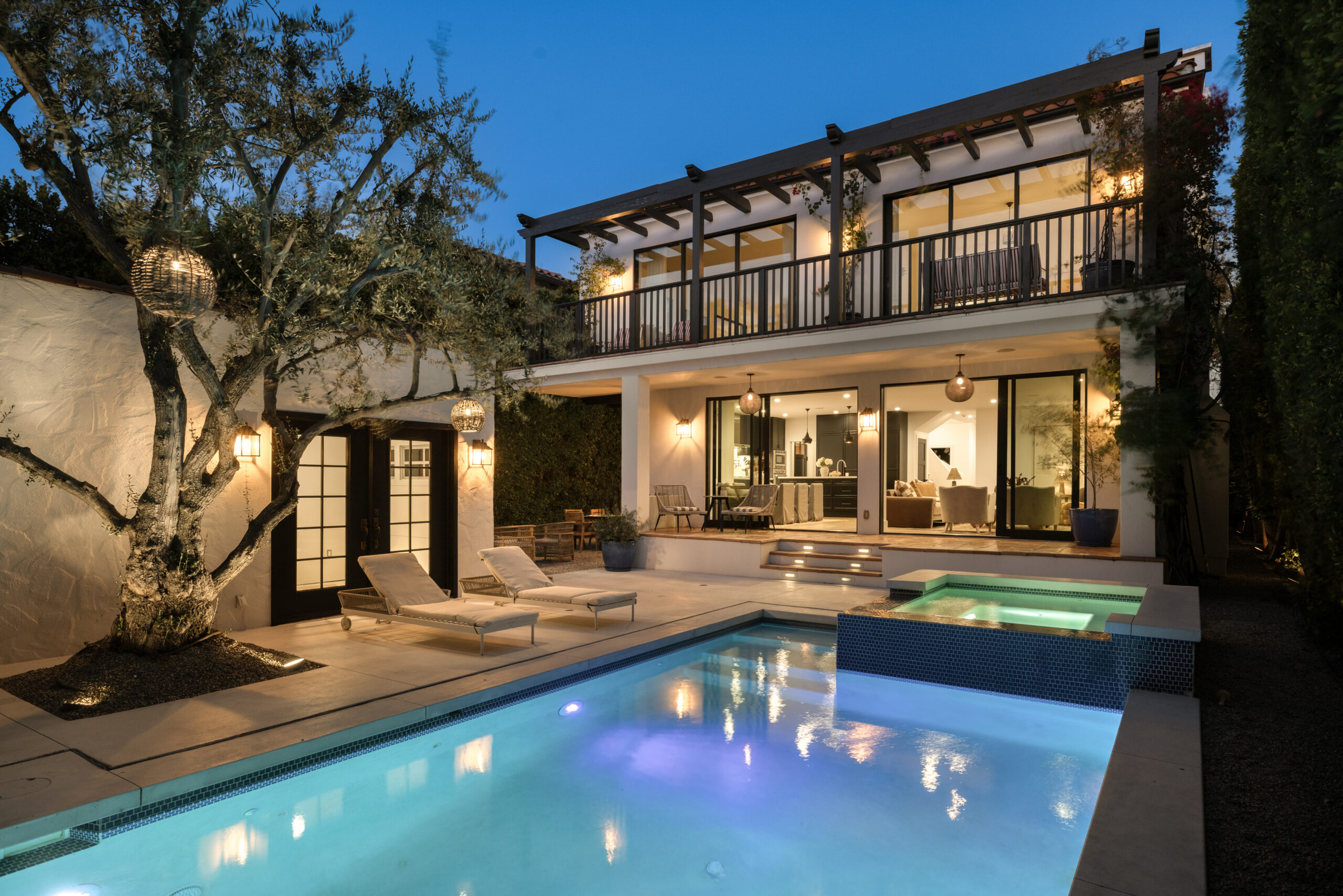
West Hollywood is denser and more vertical, and that is its appeal. The condo stock is deep and varied, from the storied 1930s buildings like Colonial House and Granville Towers to the glass towers at the Beverly Hills edge, where Sierra Towers looks down Doheny, to newer design driven buildings like 8899 Beverly, which technically sits on the West Hollywood side of Beverly Boulevard and is one of the most architecturally serious residential conversions in the city. West Hollywood also has pockets of small single family homes, most notably the Norma Triangle and West Hollywood West, where bungalows trade briskly to buyers who want a house with Beverly Hills adjacency at a West Hollywood address.
Which side fits which buyer
Choose Beverly Grove if you want a character house or duplex, a quieter street, and City of Los Angeles pricing that still delivers one of the best walkable positions on the Westside. It suits families, design minded owners who want something to restore, and investors comfortable with Los Angeles tenancy rules. The tradeoff is that ULA sits in the background at the top of the market.
Choose West Hollywood if you want a condo with real amenities, a lock and leave lifestyle, or proximity to the Sunset Strip and the nightlife and restaurant economy that comes with it. It suits first time luxury buyers, second home owners, and anyone who prizes walking to dinner over square footage. It is also, quietly, the right answer for some sellers of higher priced homes, since the absence of ULA changes the math.
And if you are torn, remember the two markets price each other. A duplex buyer priced out of the Grove’s best blocks should look at the eastern end of West Hollywood. A condo buyer who finds the Sunset Strip towers rich should walk the smaller buildings around the border, where the same floor plan can trade differently depending on which city collects the taxes.
Walking the line
The honest answer to the Beverly Grove versus West Hollywood question is that most buyers end up shopping both, often without realizing they have crossed a city limit three times in an afternoon. The differences are real, but they reward specifics: this block, this building, this tax treatment, this tenancy history. I work both sides of the line every week, and if you are weighing an address near the border, I am glad to walk you through exactly which rules apply to it. Reach me through the contact page and we will start with the parcel map, not the marketing remarks.
